
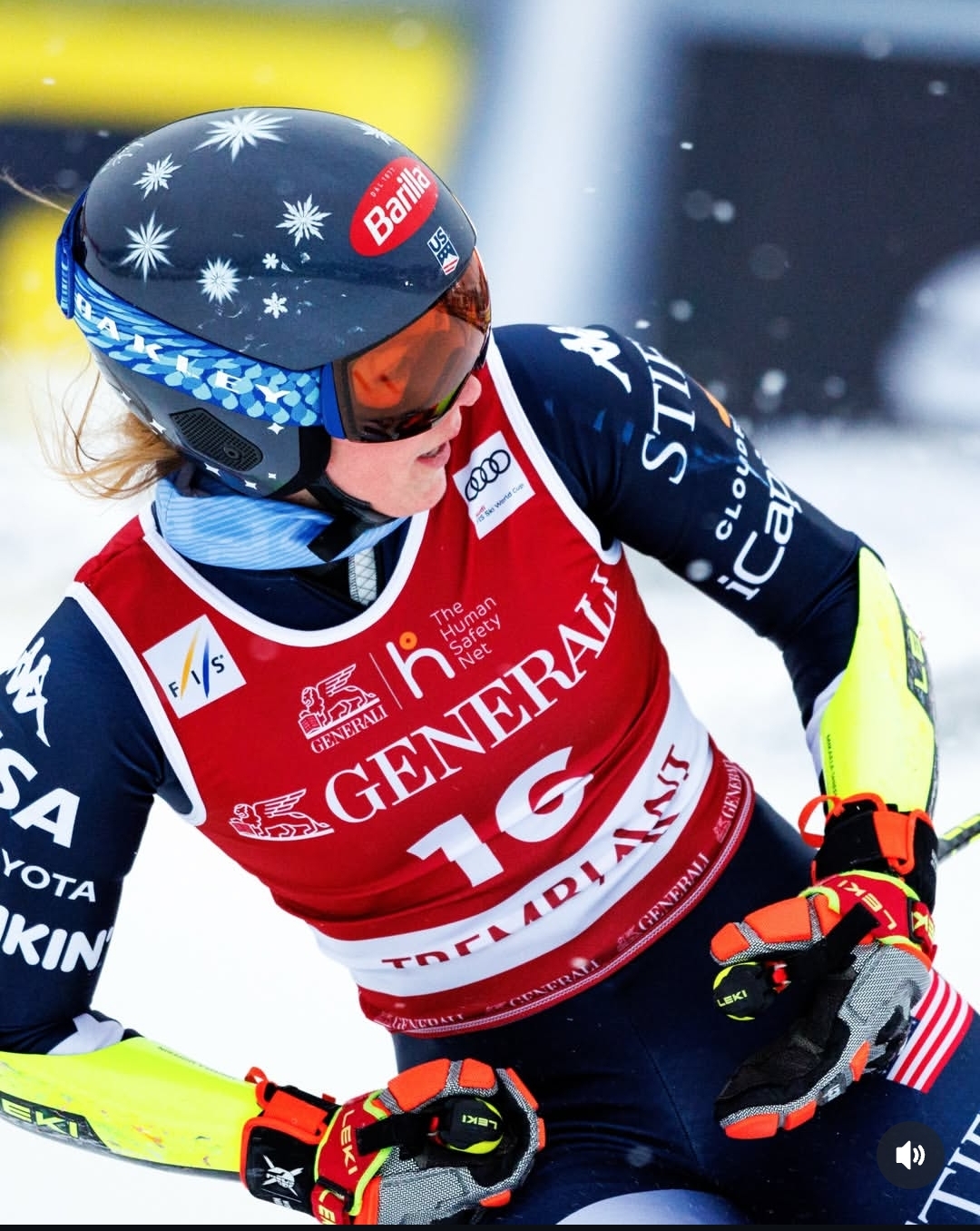
Mikaela Shiffrin returned to the World Cup top 15 for the first time since her near-fatal crash last season, delivering a sixth-place finish in giant slalom and a tied-fourth in slalom over an emotional weekend in Tremblant.
The results, while short of the podium, represent one of the clearest signs yet that the most successful alpine skier in history is regaining full command of her craft more than a year after a gate stake pierced her abdomen at Killington, tearing muscle and stopping millimetres from her spine.
“I still get some pictures sometimes,” Shiffrin said of the flashbacks, “but I’m more numb to it now.”
That quiet admission captures the essence of a recovery that has been anything but dramatic. Working closely with long-time physiotherapist Regan Dewhirst, Shiffrin has spent the past 12 months methodically rewiring a nervous system shaken by post-traumatic stress. Breathing drills on rough training terrain, morning manual therapy to calm an overprotective core, and even movement patterns drawn from infant development have all been part of a deliberate, low-key rebuild.
The strategy is paying off. After battling to stay inside the top 30 early in the season, Saturday’s sixth place vaulted her back into the crucial top-15 start group for technical events.
Speaking after the giant slalom, Shiffrin pushed back gently but firmly when an interviewer suggested her first run had been stronger. “I felt very aggressive on the second run too,” she corrected, a small moment that revealed the returning fire beneath the calm exterior.
Off the snow, Shiffrin continues to speak with rare openness about the mental side of elite sport. Sharing a press-conference stage with Canada’s Valerie Grenier, she described racing as “sometimes a necessary evil” to protect the training days she truly loves, and admitted she would still rather skip lunch than walk alone into a busy cafeteria.
Yet when she asked a room full of young racers who felt confident in the start gate and dozens of small hands shot up, her reaction was pure wonder: “You guys are a confident bunch. I wish I had that feeling.”
With 104 World Cup victories and two Olympic golds already to her name, Shiffrin insisted her drive remains rooted in the daily pursuit of a better turn rather than medals or records. The word “legacy” still makes her tense — a reminder, she says, that she still feels she hasn’t done enough.
Next up is St. Moritz this weekend, followed by the traditional December speed and tech races in Europe, before attention turns to February’s Milan-Cortina Olympics — a chance to rewrite the painful Beijing chapter on terrain where she has historically excelled.
For now, though, the focus is simpler. As she told the junior racers in Tremblant: “Everything passes. Good and bad, it all passes. And you get to move forward through it all.”
One measured, confident turn at a time, Mikaela Shiffrin is doing exactly that.
