
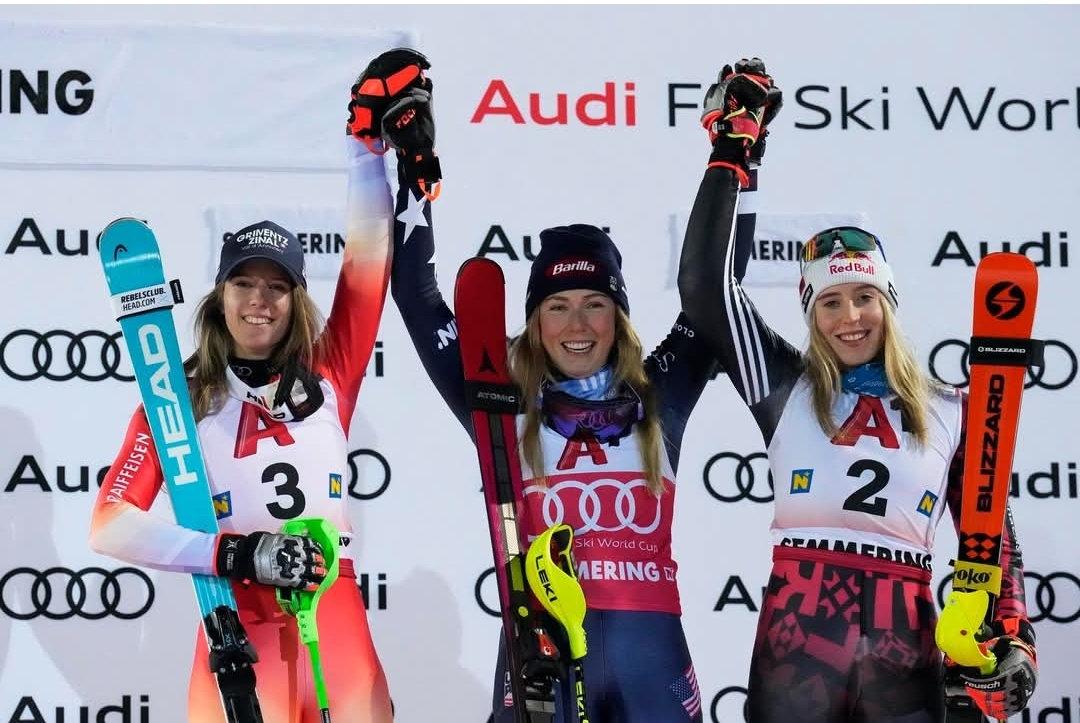
American skiing superstar Mikaela Shiffrin extended her dominant slalom winning streak to six races with a dramatic come-from-behind victory in the FIS World Cup night slalom in Semmering on Sunday, but her triumph was overshadowed by a scathing criticism of race organizers over dangerous course conditions that led to a shocking near-50% Did Not Finish (DNF) rate — the highest in a World Cup event since 1999.
Shiffrin, who overcame a 0.57-second deficit after the first run to edge Switzerland’s world champion Camille Rast by just 0.09 seconds, posted a lengthy statement on social media praising the impressive runs of Rast and third-place finisher Lara Colturi (Albania), while slamming the “unstable” and “borderline unsafe” course that left many athletes “frustrated, shaken, and even scared.”
In her emotional post, Shiffrin wrote: “The DNF rate was nearly 50%… with 39 of 79 athletes not finishing the first run, and a six-second qualification gap to second run. That doesn’t reflect the beauty of ski racing… Forty-four DNFs over two runs isn’t entertaining—it’s brutal, and honestly hard to watch.”
The 30-year-old, who secured her 106th career World Cup win and remains undefeated in slalom this season (5-for-5 in 2025-26), highlighted how the course deteriorated rapidly after the early starters due to preparation decisions amid warm weather, forcing organizers to inject salt and water — a measure that backfired as ruts and holes formed, making survival a challenge for later bib numbers.
“Thankfully, there were no major injuries,” Shiffrin noted, but stressed the need for better collaboration between FIS, national bodies, coaches, and athletes to ensure “the race is as safe, fair, and meaningful as possible.”
She also criticized a last-minute second-run course adjustment for safety reasons, which was made reactively during inspection, causing delays and fairness concerns: “This should have been addressed before opening inspection—not while athletes were already inspecting.”
Shiffrin’s outspoken comments echo post-race interviews where she told reporters the conditions were “very scary to ski” and “not safe for the girls,” particularly those starting later.
Despite the controversy, Shiffrin delivered a masterful second run — the fastest of the field by 0.63 seconds — to claim victory in 1:48.82, keeping her atop the overall World Cup standings heading into the new year.
The race marked a rare moment where the GOAT of alpine skiing used her platform to call for change, stating: “I’ll continue to speak up in situations where safety is at risk, and I hope the conversations that follow lead to constructive improvements.”
Fans and fellow athletes flooded social media with support for Shiffrin’s stance, highlighting the risks in a sport already fraught with variables. As the 2026 Milan-Cortina Olympics approach, her voice adds urgency to ongoing debates about athlete safety in World Cup racing.
