
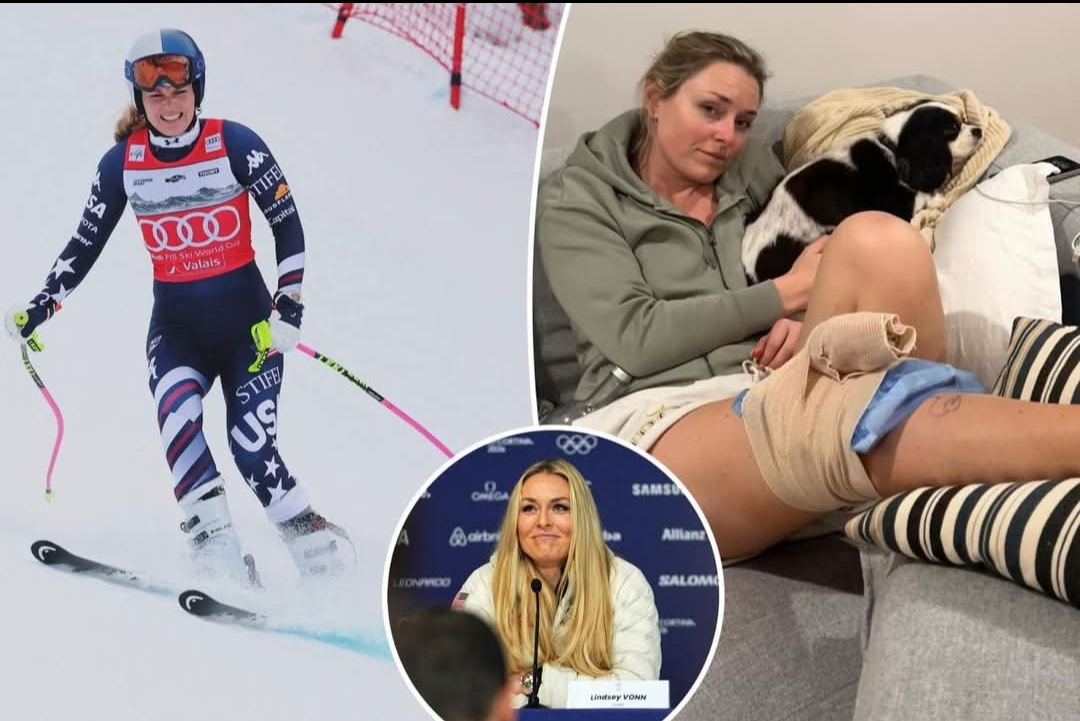
Skiing legend Lindsey Vonn is refusing to let a devastating knee injury derail her improbable comeback. The 41-year-old American announced she will compete in the women’s downhill at the 2026 Milan-Cortina Winter Olympics—just days after fully rupturing her left ACL in a crash during a World Cup event in Switzerland. Accompanied by bone bruising and meniscal damage, the injury would sideline most athletes for months, but Vonn is pushing forward with intense rehab, a specialized brace, and unshakeable determination.
In her Instagram post and press conference, Vonn shared the tough diagnosis: a complete ACL tear, plus additional complications. Yet after consultations with doctors, aggressive physical therapy, pool workouts, box jumps, and even on-snow testing, she declared herself capable of racing Sunday. “This was obviously incredibly hard news to receive one week before the Olympics,” she wrote. “But I have determined I am capable of competing in the Olympic Downhill.”
Her coach expressed zero doubt, noting no pain during workouts and full confidence in her ability to compete. Vonn echoed this resilience: “I’m not letting this slip through my fingers.”
The Harsh Reality Doctors Highlight
Experts emphasize this is no ordinary comeback. The ACL stabilizes the knee against twisting and forward slides—critical in high-speed downhill skiing where forces are extreme. Orthopedic surgeons like Dr. Kevin Stone (former U.S. Ski Team physician) note that while Vonn isn’t a “normal human being” in terms of athletic conditioning, the loss of stability poses major risks:
Instability and Buckling: Without an intact ACL, the knee can give way on sharp turns or landings, potentially causing further damage like additional meniscus tears or bone issues.
Pain Management vs. Performance: Vonn reports no swelling or pain post-therapy, but high-speed descents could trigger issues. Doctors say bracing helps, but it’s not foolproof.
Long-Term Consequences: Delaying surgery risks worsening the joint, though Vonn plans to repair it after the Games. Specialists call it “risky but possible” for elite athletes who’ve adapted through strength and technique.
Mental Toll: Beyond physical hurdles, the fear of reinjury looms large. Vonn’s mental coach highlights her drive—she “wants” this, not “needs” it—fueling her to inspire despite the odds.
Vonn, a three-time Olympic medalist who returned from retirement (and a prior partial knee replacement), already defied expectations by topping downhill rankings at 41. Now, this becomes her most improbable chapter: racing the world’s fastest skiers on a compromised knee for one last shot at glory.
As one analyst put it, “She is the kind of person who would ski with a torn ACL.” The Olympics downhill awaits—proof that for Vonn, limits are meant to be tested.
