
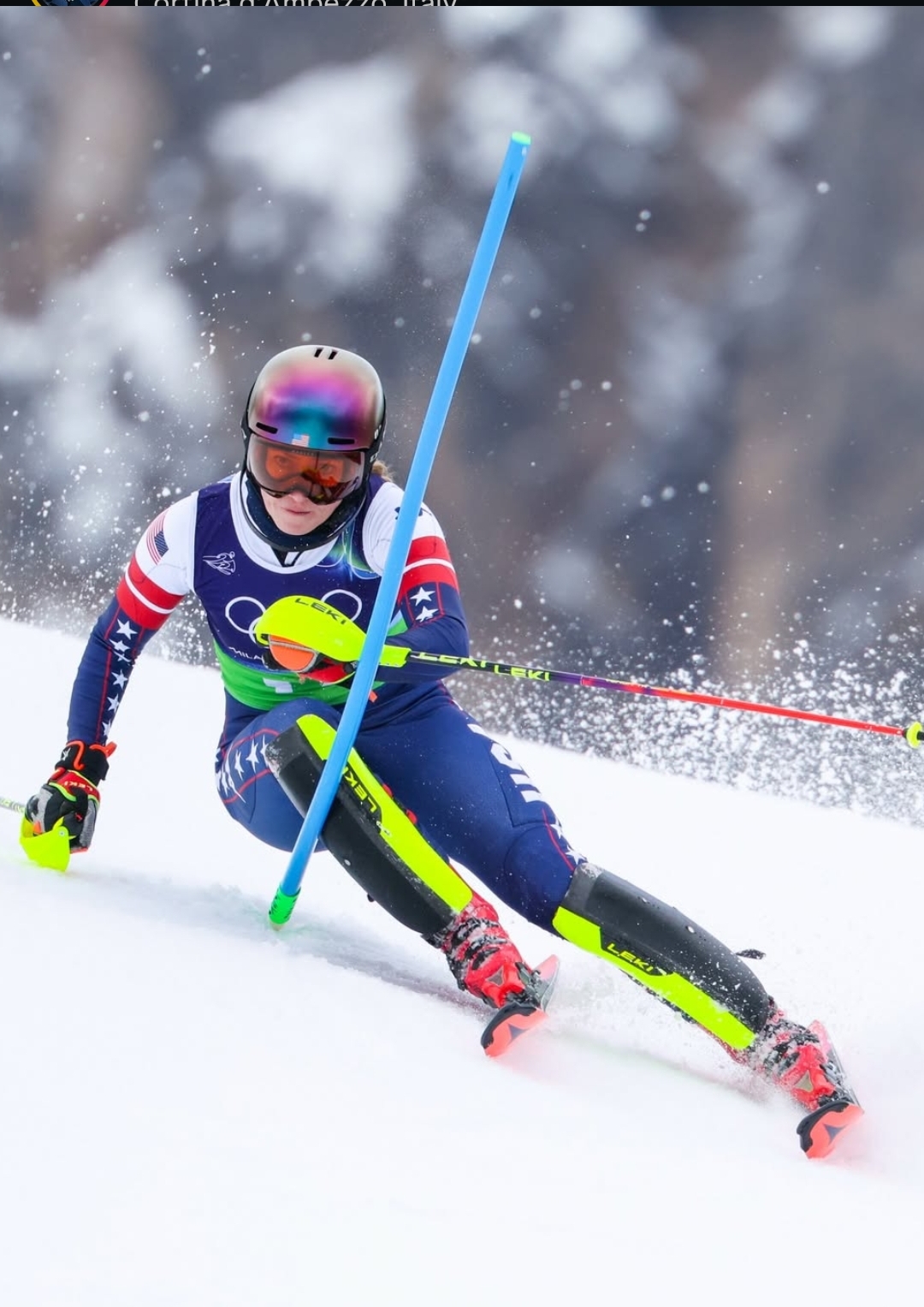
Mikaela Shiffrin’s long wait for another Olympic medal stretched further on Tuesday as the American superstar and teammate Breezy Johnson finished a agonizing fourth in the inaugural women’s team combined event at the Milano Cortina 2026 Winter Olympics.
Austria’s Ariane Raedler and Katharina Huber claimed the historic gold with a combined time of 2:21.66, edging out Germany’s Kira Weidle-Winkelmann and Emma Aicher for silver by just 0.05 seconds. Team USA’s other duo, Jackie Wiles and Paula Moltzan, secured bronze, while Shiffrin and Johnson missed the podium by a razor-thin 0.06 seconds.
The result marks yet another chapter in Shiffrin’s puzzling Olympic struggles, extending her medal drought to seven consecutive races without a podium since her triumphs at PyeongChang 2018. The 30-year-old, holder of the all-time World Cup wins record with 108 (including a staggering 71 in slalom) and already dominant this season with multiple victories and the slalom Crystal Globe secured, entered as a heavy favorite alongside downhill specialist Johnson.
Johnson delivered brilliantly in the morning downhill on the Olympia delle Tofane course, posting the fastest time and giving the pair a narrow lead of nearly half a second heading into the afternoon slalom leg. Fresh off her individual downhill gold earlier in the Games, Johnson admitted pre-race nerves due to recent crashes on the hill—including Lindsey Vonn’s severe injury—but skied with freedom and confidence.
“I didn’t feel so worried that I was going to blow out, which was my biggest fear today,” Johnson said. “I just was like, ‘Let’s have some fun. Let’s ski relaxed and free.’ And I feel like I did that.”
But Shiffrin, the slalom queen who rarely falters in her signature discipline, couldn’t replicate the magic. Starting last with the advantage, she skied tentatively from the outset, losing ground at every intermediate timing and finishing with the 15th-fastest slalom time out of 18 competitors who completed the run. Her sluggish performance—described as lacking rhythm and full commitment—dropped the duo from first to fourth in the final standings.
“I didn’t quite find a comfort level that allows me to produce full speed,” Shiffrin reflected post-race. “I’ve been so prepared for all the slaloms this year. So there’s something to learn from this day. And I’m going to learn it. I want to be careful not to make excuses because it’s not really an excuse.”
The near-miss stung particularly hard given the event’s new Olympic status and the high expectations surrounding the pairing. Shiffrin’s Olympic record remains mixed: gold in slalom at Sochi 2014, plus giant slalom gold and combined silver at PyeongChang 2018, followed by a frustrating 0-for-6 in Beijing 2022 with multiple DNFs.
With the individual giant slalom approaching soon and the slalom later in the Games, the pressure mounts for the greatest technical skier of her era to rediscover her winning form on the Olympic stage. For now, the “Olympic hex” persists, leaving fans and the skiing world wondering if Shiffrin can finally break through before these Games conclude.
