
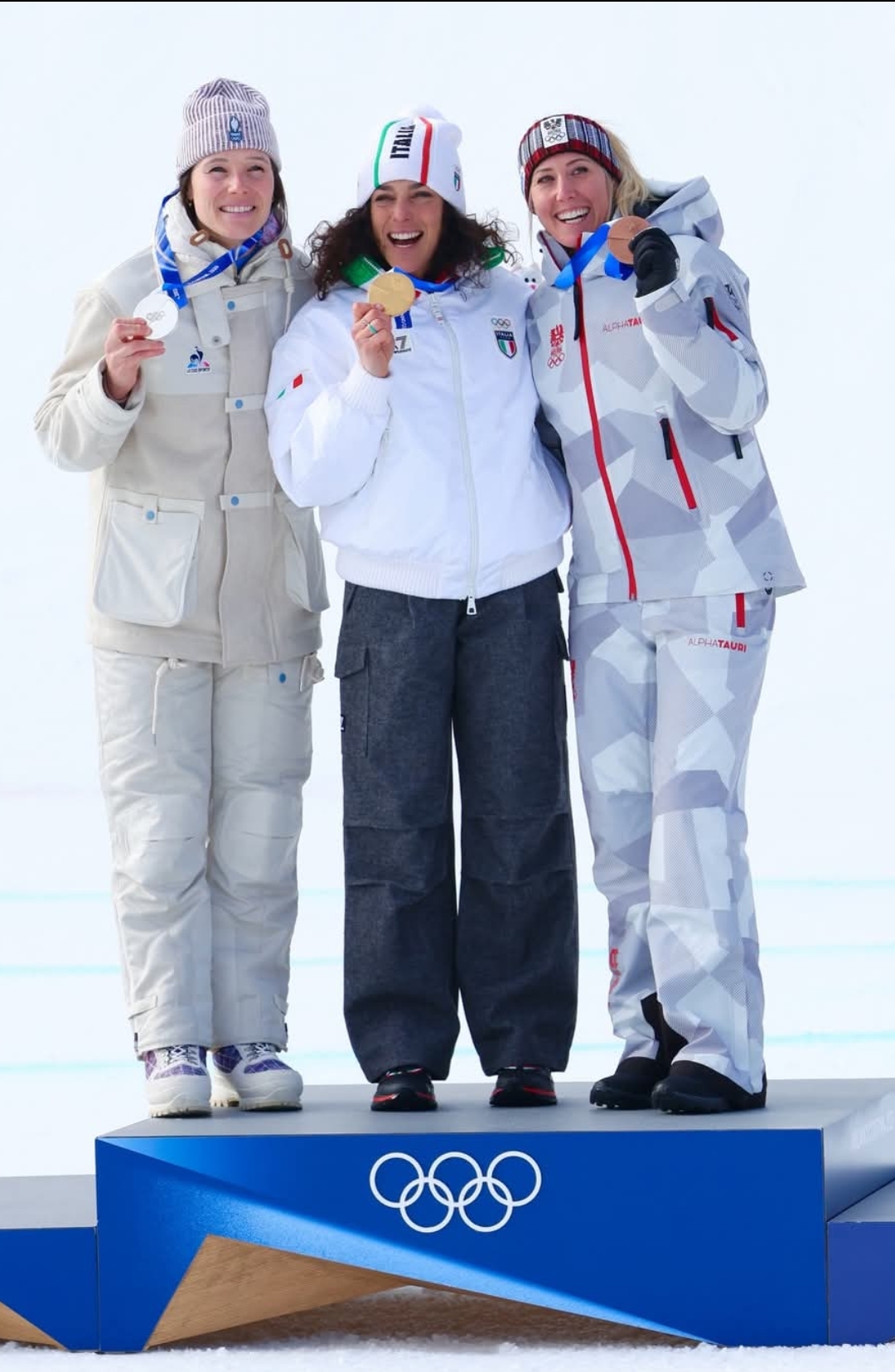
In a stunning upset at the Milan Cortina 2026 Winter Olympics, Austria’s Ariane Raedler and Katharina Huber captured the inaugural women’s team combined gold medal on February 10, defying expectations and handing American superstar Mikaela Shiffrin yet another heartbreaking near-miss.
Neither Raedler nor Huber had ever won a World Cup race individually, but together they delivered a flawless performance in the new event format. Raedler laid a strong foundation with the second-fastest downhill run, while Huber sealed the victory with the 10th-quickest slalom leg. Their combined time of 2:21.66 edged out Germany’s Kira Weidle-Winkelmann and Emma Aicher (2:21.71) for silver by a razor-thin margin.
The U.S. duo of Jacqueline Wiles and Paula Moltzan secured bronze with a time of 2:21.91, marking career-first Olympic medals for both skiers. Wiles posted the fourth-fastest downhill, and Moltzan delivered the fourth-quickest slalom.
Shiffrin, the most decorated skier in World Cup history with a record 108 victories—including 71 in slalom—entered the event as a heavy favorite alongside teammate Breezy Johnson, who had just claimed gold in the individual downhill. Johnson gave the Americans a slim lead after the downhill leg (1:36.59, the fastest time), but Shiffrin struggled in the slalom, finishing 15th-fastest (45.38) and losing ground at every intermediate checkpoint.
The Shiffrin-Johnson pair crossed in 2:21.97—0.31 seconds off the gold pace and just 0.06 seconds behind their compatriots for bronze—leaving them in fourth place. In the finish area, Johnson embraced a visibly disappointed Shiffrin as celebrations erupted for the podium teams.
“No tricks here at all,” Shiffrin was reportedly told over team radio before her run. “Actually, it’s nothing to report. You got it.” Despite the encouragement, the slalom specialist couldn’t find her usual rhythm on a course set by an Austrian coach.
The result extends Shiffrin’s Olympic medal drought. After earning two golds and a silver in her first two Games, she failed to medal in any of her six events at Beijing 2022. This marks her seventh consecutive Olympic race without a podium finish.
“For me, it was sure that Mikaela could do it,” Huber said afterward. “In the end, it was really a surprise gold medal for us.”
Germany’s Aicher, an all-around talent who also took silver in the individual downhill, noted the unpredictability of the sport: “Usually, Mikaela is the best slalom skier, and we expected her to be super good in this slalom today, too. But this is also slalom. You never know.”
The team combined event pairs one skier’s downhill time with another’s slalom time, with the lowest combined total winning. The format rewarded Austria’s balanced approach and exposed the pressure on favorites like Shiffrin.
Shiffrin still has opportunities ahead in her signature events: giant slalom and slalom. For Raedler and Huber, this breakthrough moment cements their place in Olympic history.
