
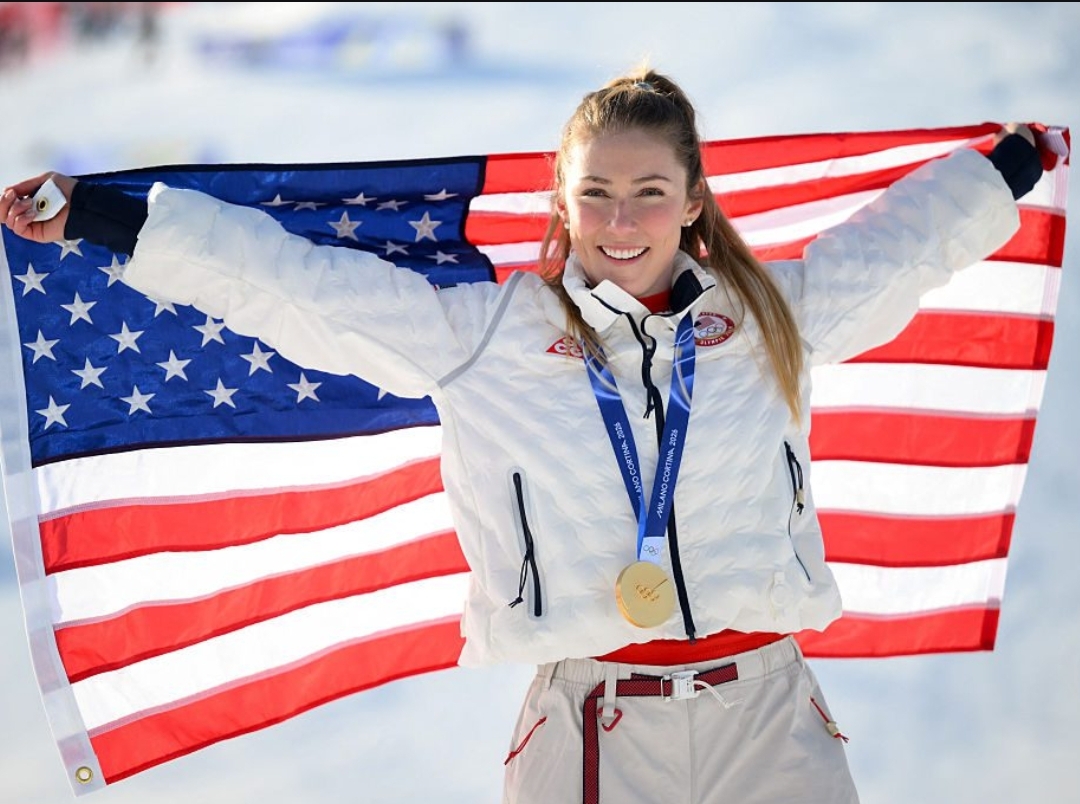
In a career-defining moment laced with profound emotion, American alpine skiing legend Mikaela Shiffrin stormed to gold in the women’s slalom at the 2026 Winter Olympics on February 18, ending an eight-year Olympic medal drought and cementing her place as one of the sport’s all-time greats.
The 30-year-old delivered two masterful runs on the demanding Tofane course in the Dolomites, finishing with a combined time of 1:39.10 — a commanding 1.50 seconds ahead of Switzerland’s Camille Rast (silver) and 1.71 seconds clear of Sweden’s Anna Swenn Larsson (bronze). The margin marked the largest in any Olympic Alpine event since 1998 and the third-biggest in women’s slalom history.
Shiffrin, who first captured Olympic slalom gold as an 18-year-old in Sochi 2014, described racing in a “spiritual state” that allowed her to overcome immense personal pressure and grief. After crossing the finish line, she dropped into a squat for a private moment of reflection before embracing competitors and dissolving into tears during a heartfelt hug with her mother and coach, Eileen.
“This was a moment I have dreamed about — I’ve also been very scared of this moment,” Shiffrin said, her voice trembling. “Everything in life that you do after you lose someone you love is like a new experience… Maybe today was the first time that I could actually accept this reality.”
Her victory carried deep personal significance: Shiffrin has openly grieved the 2020 accidental death of her father, Jeff, at age 65. Thoughts of him flooded her mind before the second run, turning tears into fuel. “I was thinking about the fact that I actually can show up today and honestly say in the start gate that I have all the tools that are necessary to do my best skiing,” she added.
The win made Shiffrin the first American Alpine skier to claim three Olympic golds, adding to her silver from PyeongChang 2018. It also completed a full-circle journey: from teenage prodigy to the most successful World Cup skier ever (with a record 108 wins, including 71 in slalom), through crashes, post-traumatic stress, and intense scrutiny after a medal-less 2022 Beijing Games.
U.S. Ski and Snowboard Association CEO Sophie Goldschmidt called it “the most well-deserved medal for an athlete to win,” praising Shiffrin’s ability to rise above expectations and “just go for it.”
Shiffrin’s dominant performance — leading by 0.82 seconds after the first run and recovering from a brief gate strike — silenced critics and rewrote her Olympic narrative. As she accepted her medal on the podium, hand to mouth in disbelief, it symbolized release after years of heartbreak.
In another league, as her bronze-medal rival put it, Shiffrin has now added this redemptive gold to her unparalleled legacy — a testament to resilience, skill, and the enduring power of family.
