
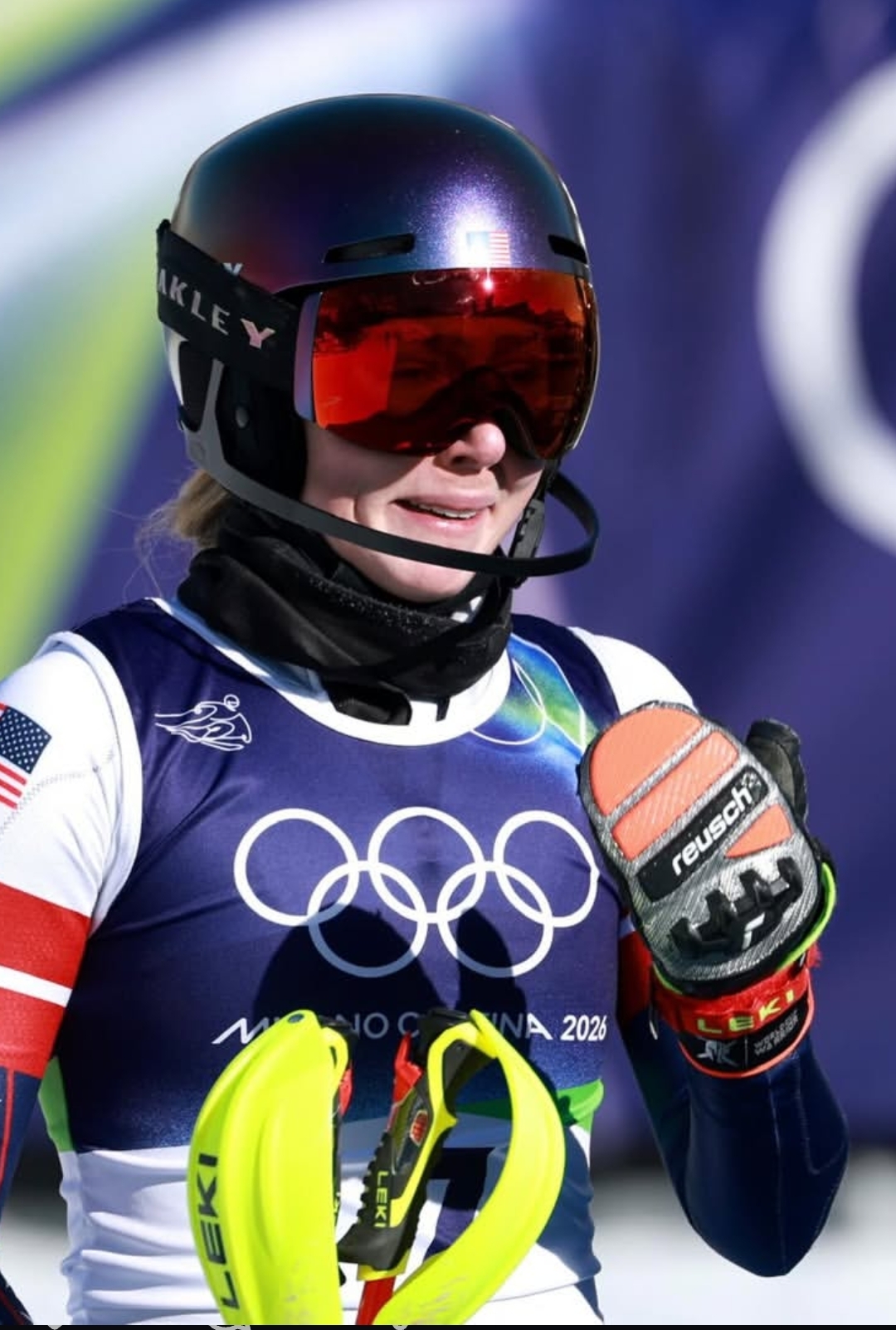
In a raw, heart-wrenching post-race interview that has the world in tears, American skiing icon Mikaela Shiffrin opened up about grief, acceptance, and her late father Jeff after claiming her third Olympic gold medal in the women’s slalom at the Milano Cortina 2026 Winter Olympics.
The 30-year-old legend, who dominated the Tofane course with flawless runs to end an eight-year Olympic medal drought, didn’t lead with stats or celebration. Instead, fighting back tears, she spoke directly about the pain of achieving her dreams without the man who shaped her career—her father Jeff Shiffrin, who tragically passed away in a 2020 accident at age 65.
“This was a moment I have dreamed about,” Shiffrin said softly, her voice trembling. “I’ve also been very scared of this moment. Everything in life that you do after you lose someone you love is like a new experience. It’s like being born again. I still have so many moments where I resist this. I don’t want to be in life without my dad.”
Pausing to compose herself, she continued: “And maybe today was the first time that I could actually accept this reality. Instead of thinking I would be going in this moment without him, to take the moment to be silent with him.”
Shiffrin revealed the complex layers of her grief journey, admitting she hasn’t felt the “deep spiritual connection” others describe after loss. “Part of my journey through grief has been challenging because I don’t feel this thing that a lot of people talk about… Sometimes I’ve been resentful of the people who talk about feeling this person… And I’m like, ‘Where? Why do you get to feel that? Why can’t it just be easier today?’”
Before her second run, she described a deeply personal moment—trying to nap but instead crying while thinking of her dad. She even experimented with “manifesting,” writing a simple, powerful note to herself: “I won. I f***ing won. This, right here, is the lottery and I won.”
This victory marks her third Olympic gold (slalom in 2014, giant slalom in 2018, and now slalom again—12 years apart), making her the most decorated American Alpine skier in history with four total medals. Yet the win felt like more than hardware; it was healing, a quiet reconciliation with loss.
The skiing world has rallied around Shiffrin’s vulnerability, with fans and fellow athletes flooding social media with support. Her honesty about grief has turned this triumph into something profoundly human—proof that even legends carry invisible weights.
As the Milano Cortina Games near their close, Shiffrin’s words remind us: greatness on the mountain often comes hand-in-hand with the hardest battles off it.
