
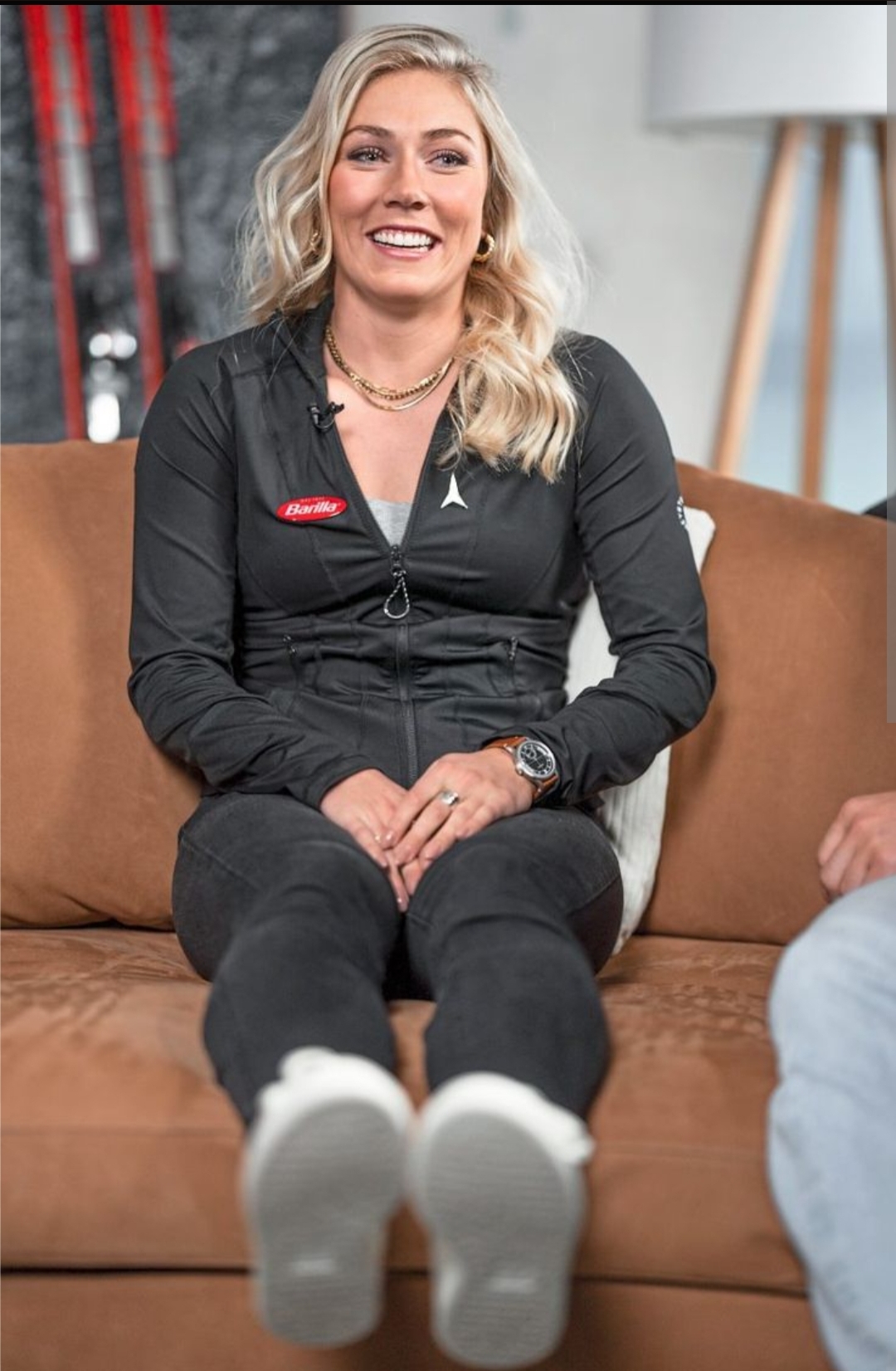
American alpine skiing icon Mikaela Shiffrin is rewriting the narrative surrounding her triumphant return to Olympic glory at the Milano Cortina 2026 Winter Games. After securing her third career Olympic gold medal in the women’s slalom — her first individual Olympic gold in eight years — the 30-year-old legend pushed back firmly against the media’s go-to storyline of “redemption,” “revenge,” or ending a so-called “medal drought.”
In a candid interview with Sports Illustrated, Shiffrin rejected the oversimplified framing that her dominant victory was merely about bouncing back from past setbacks. “If we’re talking about life growth… Beijing was probably one of the most important time periods of my life,” she explained. “Now I can walk away from this Olympics and have another gold medal… the storyline out there is that I got my revenge. I came back. There was a medal drought, and it’s just too simple for what has really happened in the last 8 years, the last 12 years.”
Shiffrin’s path to this historic moment was anything but linear. She started the Games with challenges: a fourth-place finish in the team combined and an 11th in giant slalom. But in her signature event, the slalom, she delivered pure mastery. After topping the first run on February 18 with a time of 47.13 seconds, she held a commanding 0.82-second lead. In the decisive second run, she posted 51.97 seconds for a combined 1:39.10 — winning by a massive 1.50 seconds over Switzerland’s Camille Rast (silver) and Sweden’s Anna Swenn-Larsson (bronze). The margin marked the largest in any Olympic alpine event since 1998.
The victory elevated her to four Olympic medals total (three golds: slalom 2014, giant slalom 2018, slalom 2026; one silver in combined 2018), making her the most decorated American women’s alpine skier in Olympic history and the first U.S. skier to win three Olympic golds.
Behind the scenes, Shiffrin revealed the emotional intensity of the wait between runs. As the leader, she skied last in the second leg, giving her about 30 minutes of downtime. “I found it really challenging to manage my energy and focus,” she shared. Lying on the ground in the hospitality area with music playing, her mind raced before shifting to gratitude. “I started to actually think about my family and support and my dad… sending a note to them in my mind, like thank you for everything you’ve done.” The moment turned deeply emotional — she even had to remind herself not to cry before the race was over. “Waiting is tough,” she admitted.
This win wasn’t about erasing a “drought” for Shiffrin; it was about profound personal growth, resilience through grief (including her father’s passing in 2020), and staying true to the joy of skiing. With the Games behind her, she’s already eyeing the FIS World Cup circuit, including upcoming races like the women’s super-G in Soldeu, Andorra, on February 28 and March 1.
Shiffrin’s refusal to fit the easy “comeback kid” box reminds fans why she’s a legend: her story is deeper, richer, and far more human than any headline. Queen of the slopes reigns on her own terms! 🏔️❤️⛷️
