
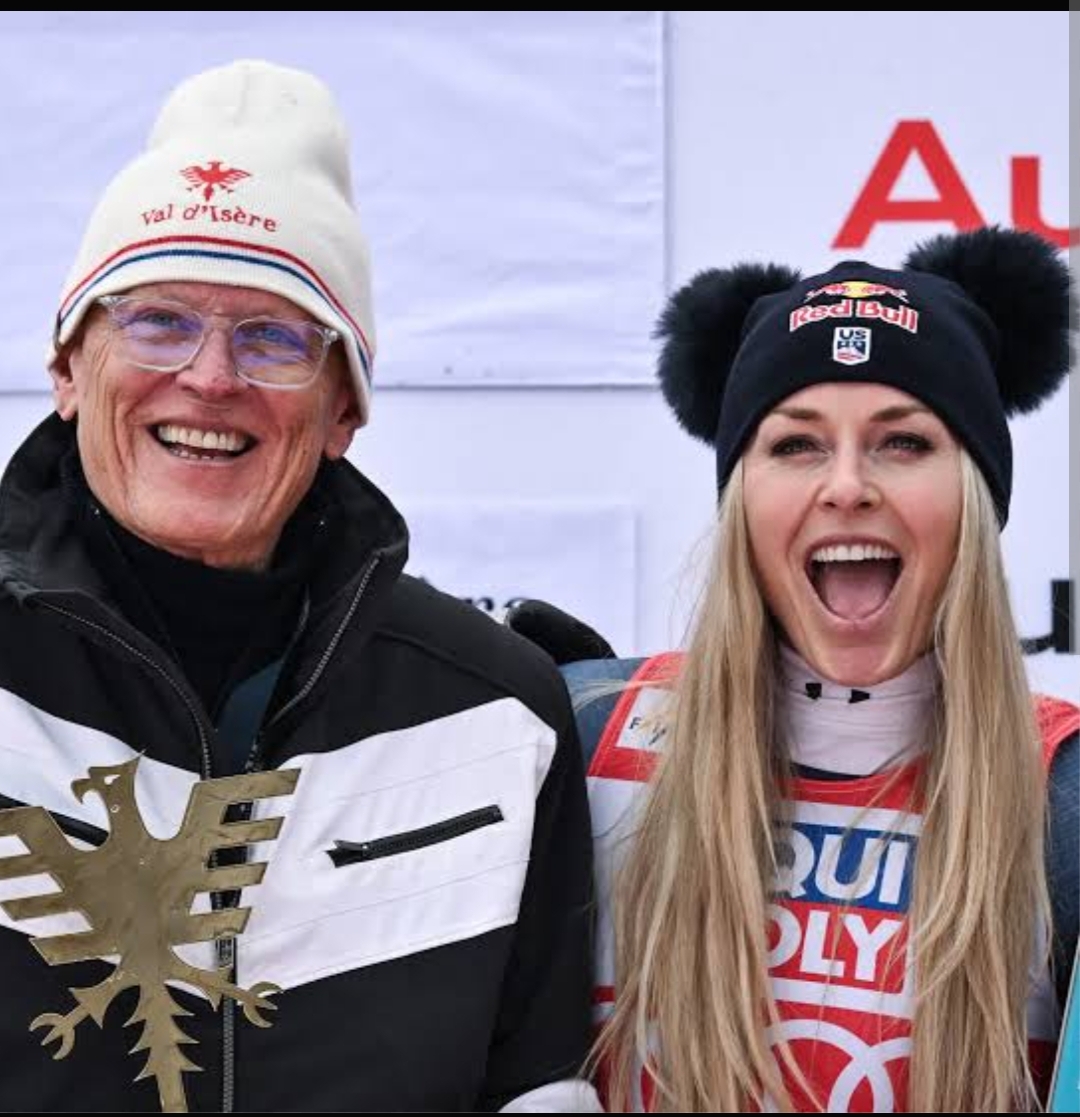
Lindsey Vonn has long described her father, Alan Kildow (a former ski racer whose own career ended early due to injury), as her first coach starting when she was about 3 years old. She has called him a “hard ass” who “didn’t sugarcoat anything” and made training deliberately tough because she wanted to succeed as a ski racer.
In older interviews (like her 2017 60 Minutes appearance and a 2010 Denver Post piece), she spoke about the “hot and cold” dynamic: strong support and pride during wins (which she said happened ~90% of the time), but heavy criticism, negativity, and emotional difficulty during losses or setbacks. She admitted it was hard to balance her emotions as a young athlete.
Vonn credits this intensity with helping build the mental toughness that powered her historic career: 82 World Cup wins (the most by any woman), four overall World Cup titles, Olympic downhill gold in 2010, and multiple comebacks from devastating injuries.
Recent Context: The 2026 Olympics and Father’s Comments
The recent angle ties into her dramatic 2026 Milano Cortina Winter Olympics experience. At age 41, after coming out of a 2019 retirement, Vonn suffered a serious crash in the women’s downhill (breaking her left leg, with complications including compartment syndrome that nearly led to amputation). Her father publicly stated it should mark “the end of her career,” saying, “She’s 41 years old… There will be no more ski races for Lindsey Vonn, as long as I have anything to say about it.
In a recent interview (around early April 2026, including on Craig Melvin’s Glass Half Full podcast), Vonn reflected on her father’s blunt style—both the lifelong toughness and this latest “negative” push toward retirement—as unexpectedly motivational fuel. It seems to have reinforced her drive rather than deflating her; she’s been open about not closing the door on a potential return, emphasizing that she’ll decide her future on her own terms while focusing on recovery first.b6a26f
Broader Takeaway on Tough Parenting in Sports
This highlights a classic debate in high-performance environments:
Tough love can instill grit, discipline, and an internal drive to prove doubters (or critics) wrong—Vonn turned criticism into rocket fuel for overcoming injuries, doubt, and age.
At the same time, the “hot and cold” emotional whiplash can be psychologically taxing, especially for a child/teen athlete.
Many elite athletes (in skiing, gymnastics, tennis, etc.) describe similar parental dynamics as double-edged swords: instrumental to success but complicated in personal relationships. Vonn has had periods of distance from her father during her career, yet she consistently frames the net effect as positive for her achievements.
It’s a reminder that what looks like “negativity” from the outside can sometimes be raw honesty from someone who knows the brutal realities of the sport intimately. Vonn’s willingness to own both the pain and the payoff makes her story compelling.
