
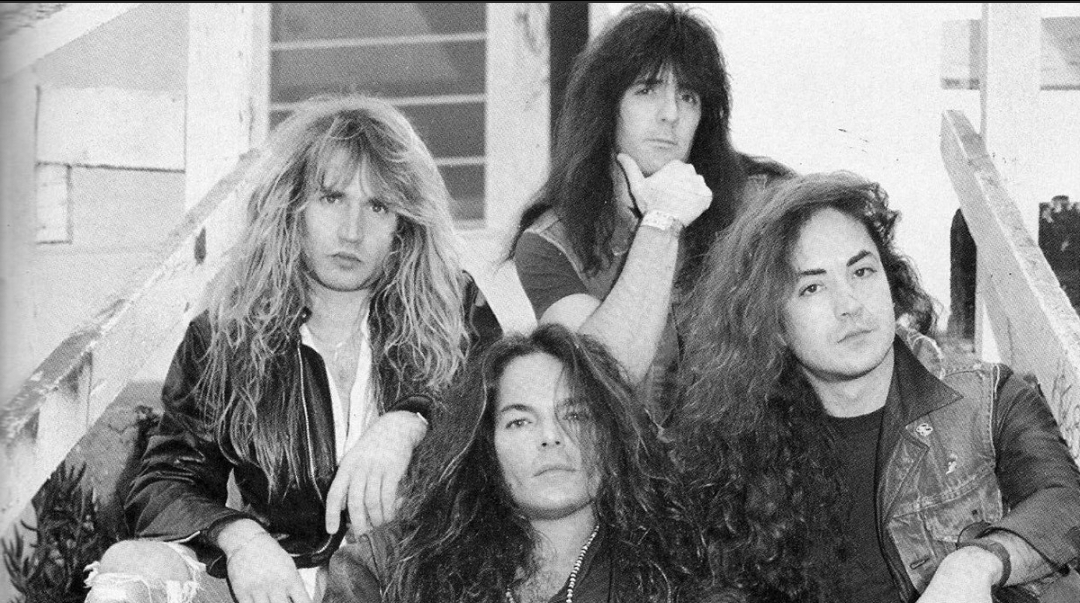
Jake E. Lee, the virtuoso guitarist known for his tenure with Ozzy Osbourne, has long regarded his post-Ozzy project Badlands as the creative pinnacle of his career. Formed in the late 1980s, the band—featuring vocalist Ray Gillen, bassist Greg Chaisson, and drummer Eric Singer—delivered a debut album in 1989 that blended searing hard rock with unmistakable 1970s influences, setting it apart from the dominant hair metal and thrash scenes of the era.
Yet, despite critical acclaim and a sound that has aged remarkably well, Badlands remains an underappreciated footnote in rock history. The group’s two studio albums have been absent from major streaming platforms and retail for years, a situation Lee recently addressed in an interview with Guitar World. Surviving members attribute the band’s curtailed success to misguided marketing, internal upheavals, and devastating personal loss.
A Distinct Identity in a Glam-Dominated Landscape
Badlands’ self-titled debut peaked at No. 57 on the Billboard 200, selling approximately 480,000 copies—a respectable figure that fell short of expectations set by Atlantic Records. The album’s strengths lay in its consistency, powerful singles like “Dreams in the Dark” and “Winter’s Call,” and a visual aesthetic that rejected hair metal excess in favor of a rugged, southern rock-inspired look.
“We weren’t your typical hair metal band,” Chaisson told author Greg Prato for the 2024 book Led Clones: The Led Zeppelin Imitator Craze of the ’80s…and Beyond. “You can look at a picture of Badlands and know that immediately.”
The band’s lineage added intrigue: Lee from Ozzy’s solo outfit, Gillen and Singer as Black Sabbath alumni, and Chaisson as an Ozzy auditionee. However, their music eschewed overt Sabbath homage, drawing instead from bluesy, retro rock vibes akin to emerging acts like The Black Crowes or Lenny Kravitz.
Label promotion, however, positioned Badlands alongside glam-leaning tours with Great White and Tesla, and pushed them toward a Skid Row-like image. “Had we had the right management and a label that better understood what we were doing and not try to make us into Skid Row, I think we would have been more successful,” Chaisson reflected.
He acknowledged the double-edged sword of their marketing: targeting guitar-hero enthusiasts and fading hair metal fans boosted initial sales but may have alienated potential audiences drawn to authentic retro revivalism.
Fractured Momentum and Irreversible Loss
Badlands’ trajectory faltered swiftly after the debut. Singer departed in 1990 to join Kiss, and the 1991 follow-up Voodoo Highway failed to match its predecessor’s impact. By 1993, the band disbanded. Demos for a proposed third album, Dusk, emerged posthumously in 1998.
Tragedy sealed any reunion hopes: On December 1, 1993, Ray Gillen died at age 34 from AIDS-related complications, robbing the group of its charismatic frontman.
Lee’s Enduring Pride
In his 2025 Guitar World interview, Lee expressed unqualified fondness for the Badlands era. “The high point of my musical career, really, was Badlands,” he said. “As far as creativity, working with other musicians, and having a band unit, that was as good as it ever got.”
Though overshadowed by broader industry forces and personal heartbreak, Badlands’ legacy endures among discerning rock aficionados as a testament to what might have been—a band of exceptional talent that defied categorization, only to be undermined by the very system meant to elevate it.
