
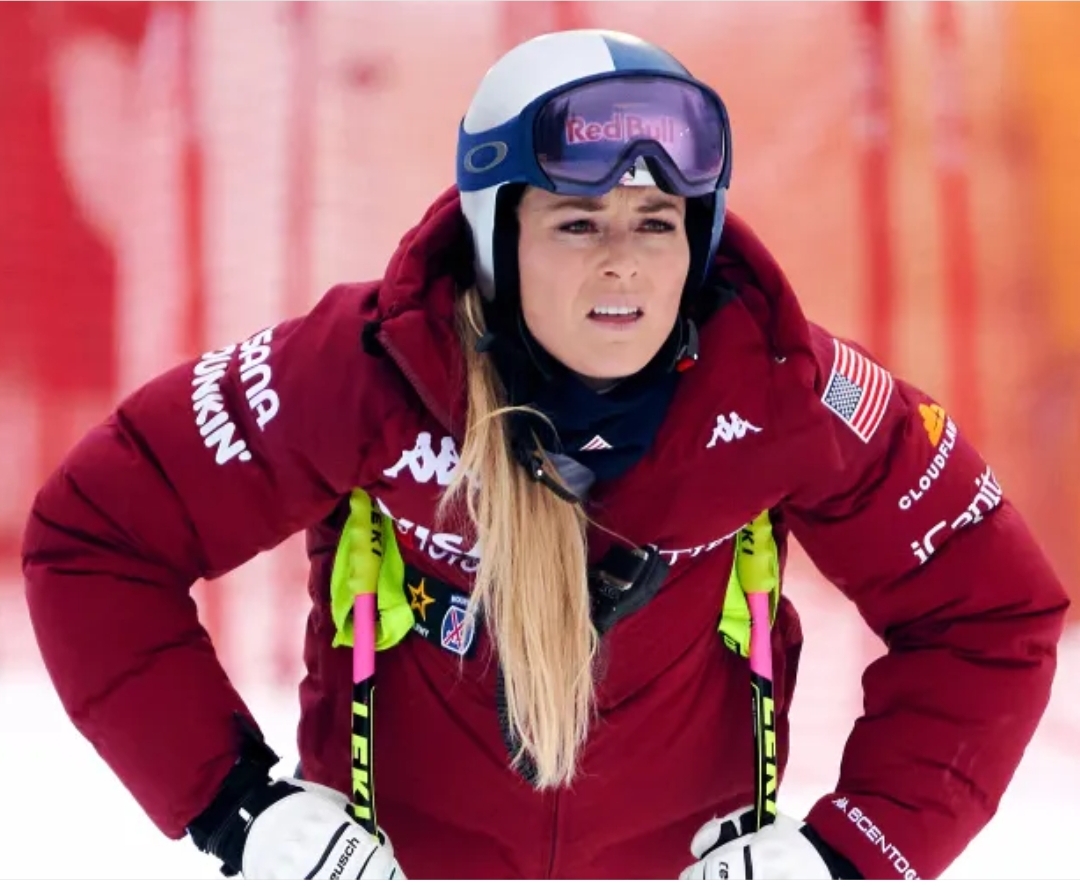
Legendary U.S. alpine skier Lindsey Vonn broke her silence Monday following a horrifying crash in the women’s downhill at the 2026 Winter Olympics, insisting she has “no regrets” about competing with a freshly torn ACL — and firmly denying the knee injury played any role in the devastating fall that left her with a complex tibia fracture requiring multiple surgeries.
The 41-year-old icon, who had staged an improbable comeback to lead the World Cup downhill standings and position herself as a gold-medal favorite, lasted just 13 seconds into her run Sunday on the Tofane slope before hooking a gate with her right arm. The mishap — which she described as being “5 inches too tight on my line” — twisted her body violently, sending her tumbling in a cloud of snow and prompting immediate medical attention and an airlift off the mountain.
Vonn, who ruptured her left ACL in a World Cup crash in Crans-Montana just nine days earlier, underwent surgery to stabilize the fracture before sharing her emotional update on Instagram.
“Yesterday my Olympic dream did not finish the way I dreamt it would,” she wrote. “It wasn’t a story book ending, but I tried. I dreamt. I jumped. Standing in the starting gate yesterday was an incredible feeling that I will never forget.”
Addressing the intense debate over whether racing on a torn ACL was reckless — given downhill skiing’s extreme speeds and risks — Vonn was unequivocal: “My ACL and past injuries had nothing to do with my crash whatsoever.”
She explained the incident as a precise technical error in a sport where tiny margins separate triumph from catastrophe. Experts, including orthopedic specialists and ski analysts, have largely backed her assessment, noting no clear evidence the brace-supported knee contributed to the gate hook or loss of balance.
“Unfortunately, I sustained a complex tibia fracture that is currently stable but will require multiple surgeries to fix properly,” Vonn added. “While yesterday did not end the way I had hoped, and despite the intense physical pain it caused, I have no regrets.”
The crash has sparked widespread discussion about athlete decision-making, risk tolerance, and the physical toll of elite competition at an advanced age. Vonn — a three-time Olympic medalist and the most successful female downhill skier in history — had defied skeptics by returning to top form after a five-year retirement and a partial knee replacement on her other leg.
Supporters flooded social media with messages of admiration for her courage, while some critics questioned the wisdom of pushing through such a severe injury so close to the Games.
Vonn’s statement closes one chapter of her remarkable Olympic return but opens another focused on recovery. The skiing community now awaits updates on her rehabilitation and whether this marks the end of her competitive career.
For now, the champion stands unbowed: no regrets, only resolve.
