
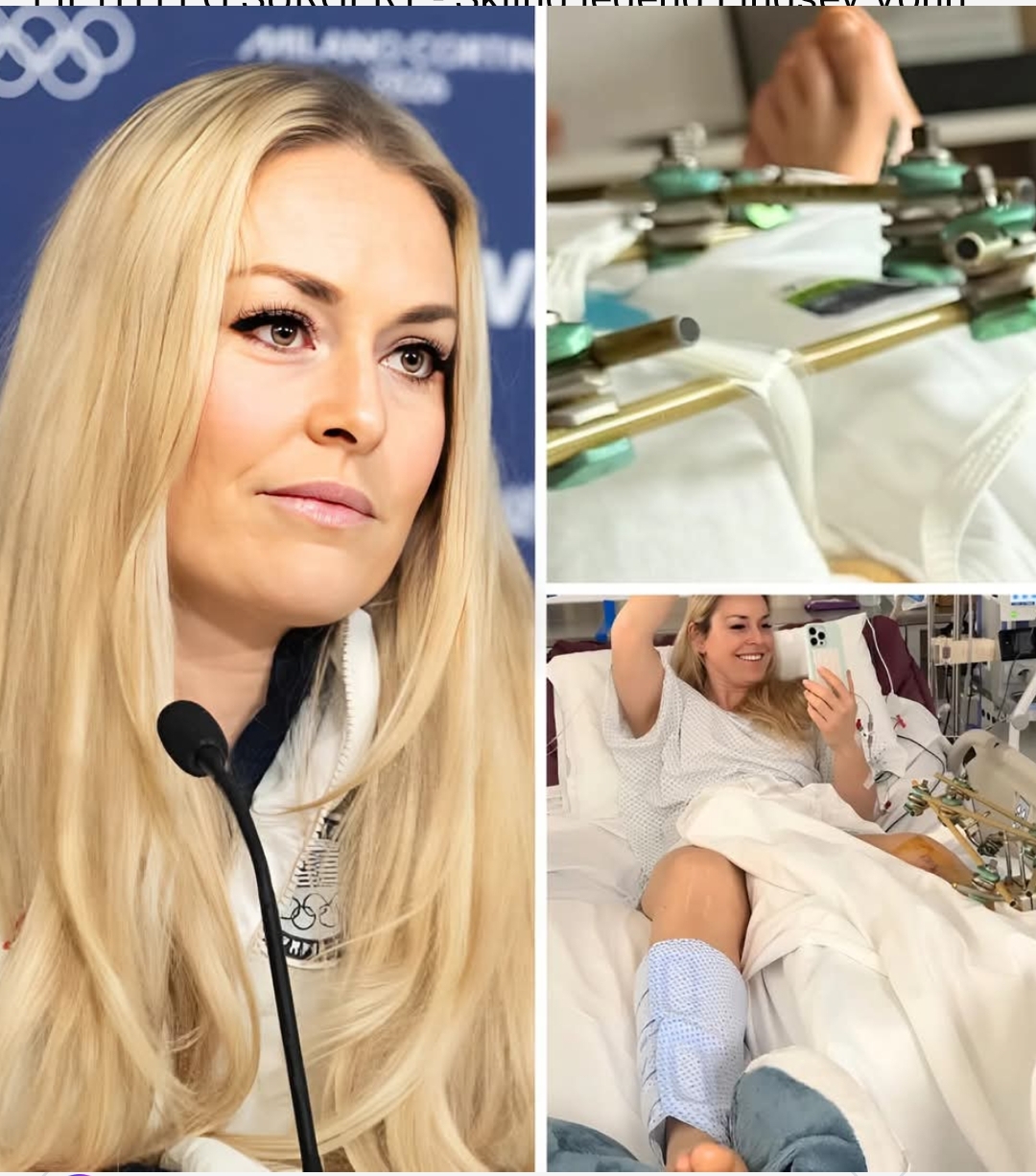
In a detailed medical breakdown, The Athletic (via The New York Times) has explained the severity of Lindsey Vonn’s catastrophic leg injury from her crash at the 2026 Milan Cortina Winter Olympics, likening the trauma to a high-impact car accident and addressing key questions about her long-term recovery and potential return to skiing.
The 41-year-old skiing legend crashed violently just 13 seconds into her women’s downhill run on February 8, clipping a gate, veering off course, and suffering massive trauma to her left leg. Vonn, who had already ruptured her ACL nine days earlier in a separate incident but chose to compete anyway, described the resulting damage as “everything in pieces.”
Medical details confirm a complex tibia fracture—involving the main shin bone—along with fractures to the fibular head and tibial plateau (the upper part of the tibia near the knee joint). The injury extended into the knee, complicating alignment and long-term function. Additionally, the crash triggered compartment syndrome, a life-threatening condition where bleeding and swelling build extreme pressure inside muscle compartments, restricting blood flow and risking permanent damage to muscles, nerves, and tissues. If untreated promptly, it can necessitate amputation.
Surgeons acted swiftly: An emergency fasciotomy—incisions to relieve pressure—was performed in Italy by Dr. Tom Hackett, credited with saving Vonn’s leg from amputation. She underwent multiple surgeries, including a six-hour reconstructive procedure in the U.S. involving extensive plates and screws to stabilize and rebuild the bones. Vonn was hospitalized for nearly two weeks, returned stateside, and remains in a wheelchair due to the left-leg fractures and a concurrent right ankle break. She has been largely immobile since the incident.
Recovery outlook: Bone healing is expected to take about a year before considering additional surgery to remove hardware. Experts note that joint-involved fractures like this demand precise reconstruction to avoid long-term issues such as arthritis or instability. While Vonn has a history of remarkable comebacks from serious injuries, the combination of severe bone trauma, compartment syndrome complications, and her age makes a full return to elite skiing uncertain. No definitive timeline for skiing again has been given, with focus now on mobility restoration and preventing chronic complications.
Vonn has shared emotional updates on social media, calling this her “most extreme, painful, and challenging” injury yet—”times 100″—while expressing gratitude to her medical team and reaffirming her fighter’s spirit. “No regrets,” she previously stated, emphasizing her determination despite the grueling road ahead.
Her openness has spotlighted the physical and psychological demands on athletes facing career-threatening setbacks on the world’s biggest stage. Fans continue to rally behind the Olympic gold medalist as she begins what could be her most daunting rehabilitation journey.
