
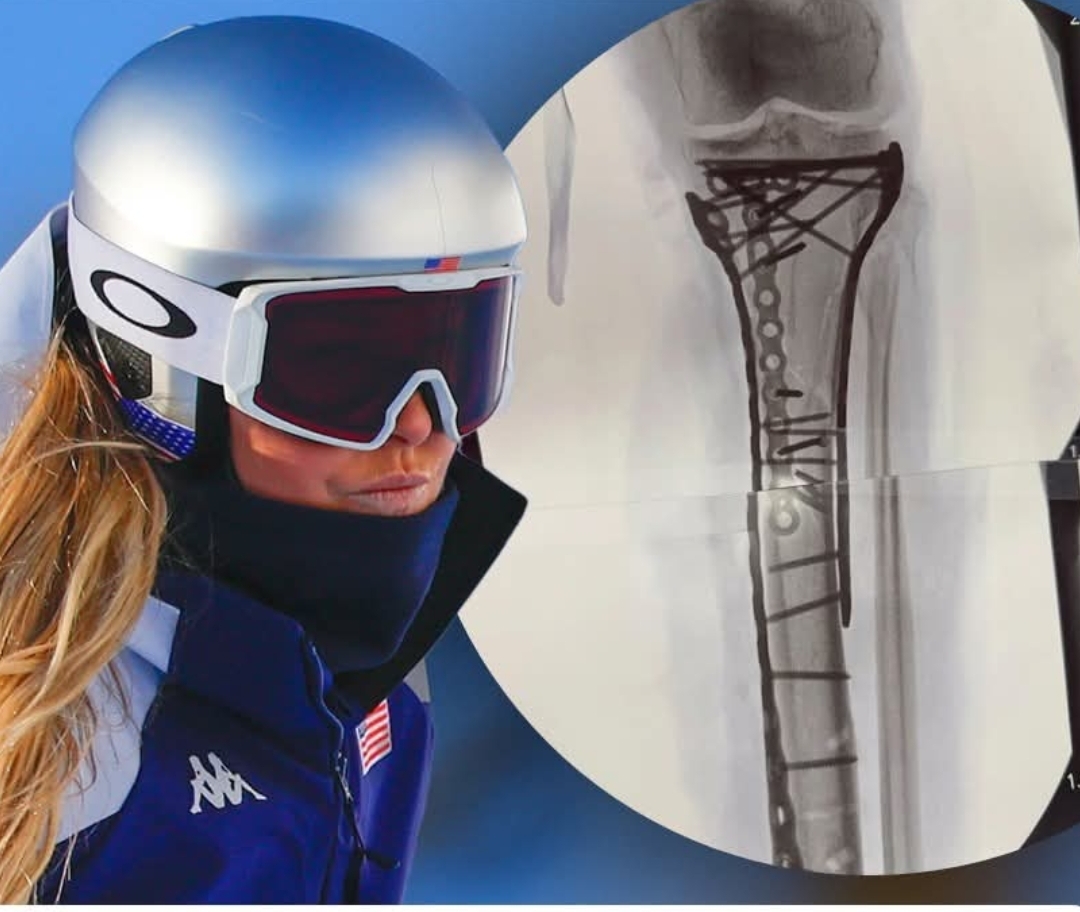
Olympic skiing legend Lindsey Vonn has opened up about the harrowing complication that turned her devastating crash at the 2026 Milan Cortina Winter Olympics into a fight for her limb: acute compartment syndrome, a rare but potentially limb- and life-threatening emergency that experts say can destroy tissue in mere hours if not addressed immediately.
In a candid Instagram video shared on February 23, Vonn, 41, revealed she was discharged from the hospital after nearly two weeks of near-total immobility following multiple surgeries. She described her left-leg injuries as “everything in pieces,” including a complex tibia fracture, damage to the fibular head and tibial plateau, and a concurrent right ankle break—compounded by the torn ACL she had sustained just days before competing.
The critical twist? Massive trauma from the high-speed fall triggered compartment syndrome, where bleeding and swelling inside the muscle compartments built extreme pressure against the tough fascia encasing them. As Vonn explained: “There’s too much blood, and it gets stuck and it basically crushes everything in the compartment… all the muscle and nerves and tendons—it all kind of dies.”
Experts consulted by Scientific American emphasized the danger: Fascia acts like an unyielding sleeve, and when pressure spikes after severe trauma—like Vonn’s violent crash just 13 seconds into her women’s downhill run—it restricts blood flow, leading to tissue necrosis, nerve damage, and potential permanent disability or amputation. Symptoms include excruciating pain out of proportion to the injury (the hallmark “first P” in the classic 5 P’s: pain, pallor, paresthesia, paralysis, pulselessness), along with numbness, tingling, and loss of function.
Dr. Jason Lee of Stanford University School of Medicine likened it to swelling trapped in a rigid envelope, while Dr. Matthew Apicella of NYU Langone Health noted that tissue death can begin in as little as four to eight hours. Incidence is low—1 to 10 percent of fractures—but rises sharply with severe long-bone injuries like Vonn’s.
Treatment required an emergency fasciotomy: deep incisions to “fillet open” the leg and relieve pressure, a procedure Vonn credits to Dr. Tom Hackett for saving her from amputation. She underwent additional reconstructive surgery in the U.S., including a six-hour operation with plates and screws to stabilize the bones. Recovery will be prolonged and complex, involving healing from both the original fractures and surgical sites, with bone union expected to take about a year before considering hardware removal or ACL repair.
Vonn, ever the fighter, highlighted an ironic silver lining: Her pre-Olympics ACL tear brought Dr. Hackett (a Team USA surgeon) to Cortina, positioning him to intervene swiftly. She’s now shifting focus to rehabilitation, progressing from wheelchair to crutches soon, and remains determined despite calling this her “most extreme, painful, and challenging” setback “times 100.”
The incident underscores a sobering reality for athletes and everyday people alike: Post-trauma swelling demands vigilance, as worsening pain signals the need for urgent evaluation to prevent irreversible damage. Vonn’s transparency continues to inspire, shining a light on the hidden medical perils behind elite sports heroism.
