
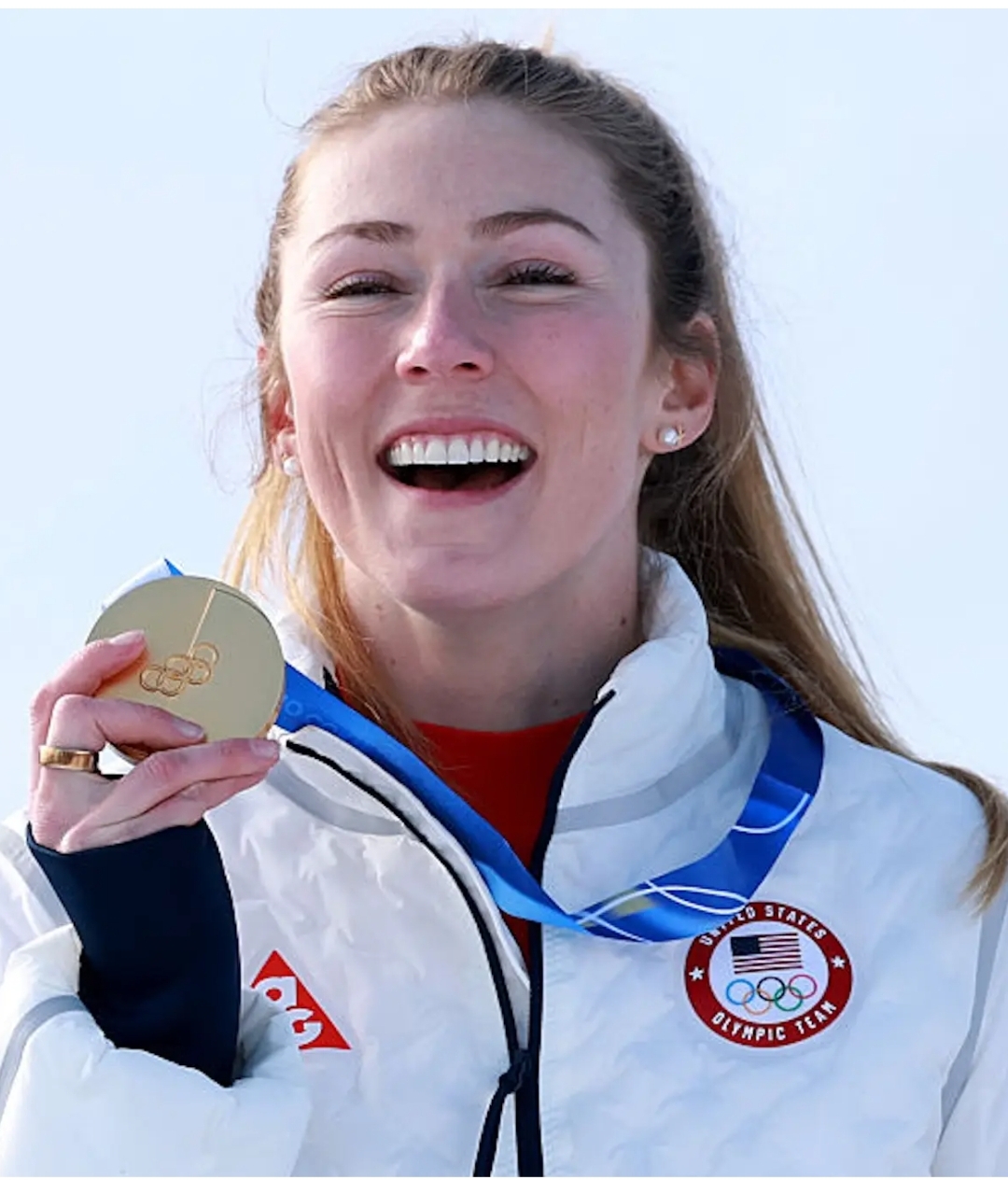
In a raw and inspiring interview with Women’s Health, alpine skiing icon Mikaela Shiffrin opened up about transforming her deepest fears, self-doubt, and the barrage of online criticism into the mental edge that powered her to gold in women’s slalom at the 2026 Milano Cortina Winter Olympics.
The 30-year-old American star, already a three-time Olympic medalist before these Games, faced a perfect storm of pressure: the emotional weight of her fourth Olympics, lingering trauma from her father’s 2020 death, severe injuries from a 2024 crash, and the sting of no medals in Beijing 2022. Yet she turned it all around with a simple but powerful daily ritual—sticky notes plastered across her bathroom mirror in Cortina d’Ampezzo, Italy.
Mantras like “You have the ability. Go and EARN what you want,” “I am loved, and this is going to be a great day. It’s going to be so FUN to try!,” and “BIG ENERGY” greeted her every morning. It was a first for Shiffrin in her 15-year World Cup career, born from a deliberate “clean slate” approach and intensive work with her psychologist to confront Olympic anxiety head-on.
“I’m sort of looking back at my whole career, and I’m like, ‘I want to show up to Milano Cortina, clean slate,’” she shared via Zoom from Austria, where she’s now with her fiancé before resuming training.
The mental prep wasn’t easy. Stripping away distractions left her alone with racing thoughts and fears of public backlash. Shiffrin confessed to feeling paralyzed by the idea that “no matter what I did, something would go wrong.” She verbalized her worries to her psychologist, her mother (whom she calls one of her key “psychologists”), and her team—then channeled them into those visible affirmations.
She also addressed the harsh reality of social media noise. After past disappointments, Shiffrin endured death threats, family attacks, and accusations of letting her country down. “If you were stuck in a room of a thousand people who were shouting slurs… are you telling me that you can actually block out all of that noise?” she asked rhetorically.
Her breakthrough? Reframing vulnerability as strength. “It’s really, really okay to be doubtful,” she said. “I actually think my doubt and uncertainty and my ability to care about what other people think is a superpower, most of the time. I just would sprinkle in the importance of being able to hear your own voice above those opinions.”
To stay grounded, she curated a soothing Instagram Explore page filled with DIY hacks and organization tips—no sports, no drama. “It was so soothing. I was in heaven,” she laughed.
The strategy paid off spectacularly. On February 18, 2026, Shiffrin delivered flawless slalom runs to claim gold, ending an eight-year individual Olympic medal drought in the event and setting a record for the longest gap between golds in the same discipline.
Even after victory, Shiffrin stays humble: the sticky notes are gone, but her new mantra for the ongoing World Cup season is clear—“The work doesn’t stop.” She’s already clinched the slalom title and eyes the overall crown as a goal on par with Olympic gold.
Shiffrin’s story of turning inner turmoil and external hate into fuel has struck a chord, with fans hailing her vulnerability as relatable and empowering. In an era of constant scrutiny, the GOAT of alpine skiing proves that true champions don’t silence doubt—they harness it. ❄️🥇
