
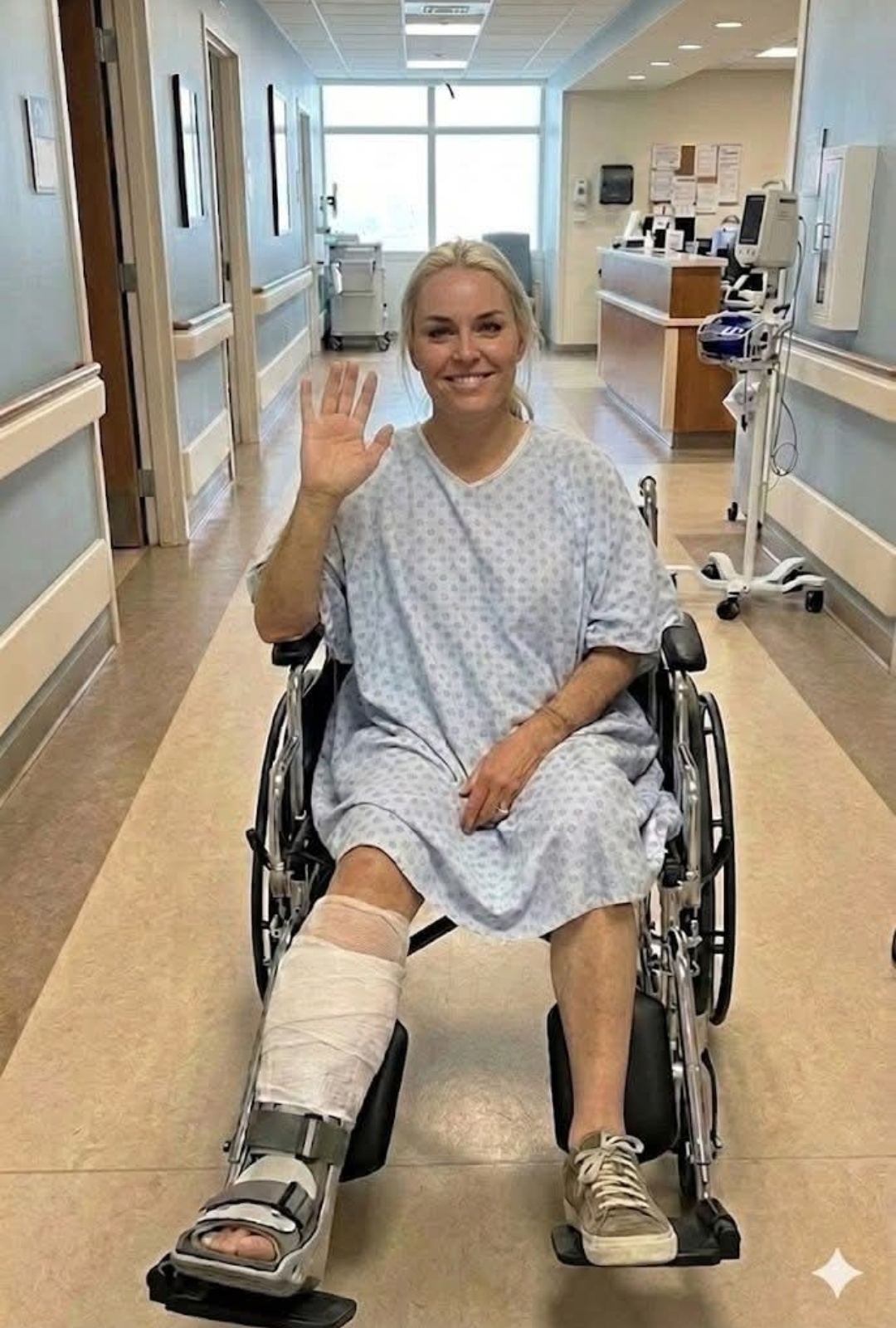
Lindsey Vonn’s terrifying crash just 13 seconds into the women’s downhill at the 2026 Winter Olympics on February 8 marked the beginning of what she describes as the most extreme and challenging injury of her storied career—by a factor of 100.
The 41-year-old American legend suffered a complex tibia fracture, breaks to her tibial plateau and fibula head, a torn ACL, and a broken right ankle. What escalated the crisis was compartment syndrome—a dangerous buildup of pressure from swelling and bleeding that threatened to crush muscles, nerves, and tendons, putting her left leg at imminent risk of amputation.
In an emotional Instagram update, Vonn credited Team USA orthopedic surgeon Dr. Tom Hackett for performing an emergency fasciotomy—essentially “filleting” open both sides of her leg to relieve pressure and save the limb. “Dr. Tom Hackett saved my leg. He saved my leg from being amputated,” she said, noting the procedure, combined with multiple stabilizing operations, prevented a catastrophic outcome. She also required a blood transfusion due to significant loss.
Vonn underwent five surgeries in total: initial stabilizations in Italy, a lengthy six-hour reconstruction with numerous plates and screws upon returning to the U.S., and further procedures to address the trauma’s extent. Post-op, she described being “very much immobile,” confined to a wheelchair, and struggling with intense pain that was “hard to manage.” Doctors warned her she might “never stand the same again,” a sentence that struck deeper than any prior fall in her injury-plagued career.
Behind the public updates of progress lay sleepless nights, raw fear, and profound vulnerability. The possibility of permanent loss challenged the fierce identity that defined her as one of alpine skiing’s greatest champions. Yet amid hospital walls and grueling rehab, Vonn found a transformed resilience—not just physical, but emotional and mental.
Now home and focused on therapy, she emphasizes baby steps toward healing: transitioning from wheelchair to crutches, rebuilding strength, and confronting the “long, long way to go.” While full recovery could take a year or more for bones to heal and function to return, Vonn’s journey hints at something bigger. Fans speculate this chapter could pivot her legacy from relentless competitor to advocate for athlete mental health, injury awareness, or even new pursuits beyond the slopes—perhaps mentoring, media, or redefining success after elite sport.
Her father’s earlier plea for retirement echoes louder now, but Vonn’s response has been one of quiet determination. What emerges isn’t defeat, but a reimagined strength: one that acknowledges limits while refusing to be defined by them.
As millions follow her progress, Vonn’s story serves as a stark reminder of the hidden costs behind Olympic glory—and the unbreakable spirit that can turn near-tragedy into a powerful new beginning.
