
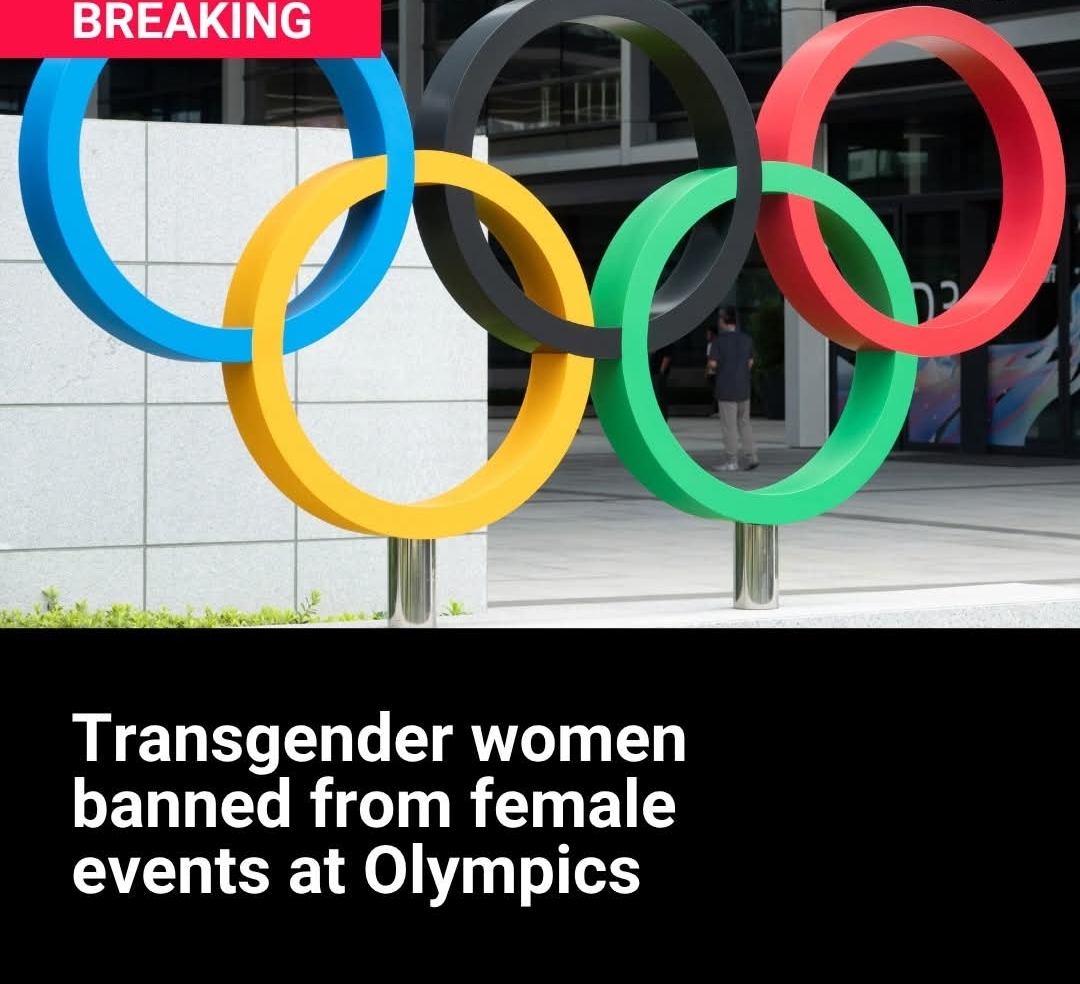
The International Olympic Committee (IOC) has introduced a major policy change that restricts eligibility in all women’s Olympic events to biological females, effective from the 2028 Los Angeles Games.
Under the new rules, participation in any female category event at the Olympic Games or other IOC-sanctioned competitions will be limited to biological females. Eligibility will be verified through a mandatory, one-time SRY gene screening — a genetic test that detects the presence of the Y chromosome typically associated with male biological sex. This approach is designed to exclude transgender women (biological males who identify as women) and athletes with certain differences of sex development (DSD) from competing in the women’s category.
IOC President Kirsty Coventry described the policy as one “led by medical experts” and emphasized its goal of safeguarding the integrity of women’s sports. “It is absolutely clear that it would not be fair for biological males to compete in the female category,” Coventry stated, aligning with the IOC’s aim to protect fairness, safety, and equal opportunity for female athletes.
The decision, finalized following an IOC executive board meeting and detailed in a 10-page policy document, marks a significant shift from previous frameworks that had granted international federations greater autonomy in setting their own eligibility criteria. The IOC had previously stepped back from universal sex testing after the 1996 Atlanta Games, citing scientific and ethical concerns at the time.
The policy is not retroactive and will not affect grassroots or recreational sports. It applies specifically to Olympic-level and IOC events across both individual and team sports. Athletes with DSD conditions, such as those involving elevated testosterone levels due to natural variations, will also be impacted if they do not meet the biological female criteria.
The IOC stated that the measures are intended to “protect fairness, safety and integrity in the female category.” Coventry, the first woman and first African to serve as IOC president (elected in 2025), had earlier highlighted “overwhelming support” among IOC members for prioritizing the protection of women’s sports through a science-based approach.
The announcement comes amid global debates over sex-based advantages in elite competition, including cases involving transgender athletes and DSD athletes like South African runner Caster Semenya. Several international federations, notably in athletics and swimming, have already implemented similar restrictions based on puberty and biological sex.
Critics, including human rights and LGBTQ+ advocacy groups, have previously raised concerns that such testing could be invasive and discriminatory. However, the IOC maintains that the one-time genetic screening provides a clear, objective, and minimally burdensome method to uphold the female category.
The policy will take full effect at the Los Angeles 2028 Olympics, scheduled for July 2028. It does not impact the men’s category or open/mixed events.
This move represents one of the most decisive actions by the IOC in recent years on gender eligibility, aiming to resolve long-standing inconsistencies across sports while responding to calls from athletes, coaches, and medical experts for evidence-based rules centered on biological reality.
Further details on implementation, including how the SRY gene test will be administered and any sport-specific nuances, are expected to be clarified by the IOC and individual international federations in the coming months.
The full policy document is available via the IOC.
