
Mikaela Shiffrin entered the Alpine Ski World Cup season full of doubt. She openly admitted she had no idea where she stood in Super-G and confirmed she wouldn’t race Downhill at all.
None of it screamed “Overall Crystal Globe contender.”
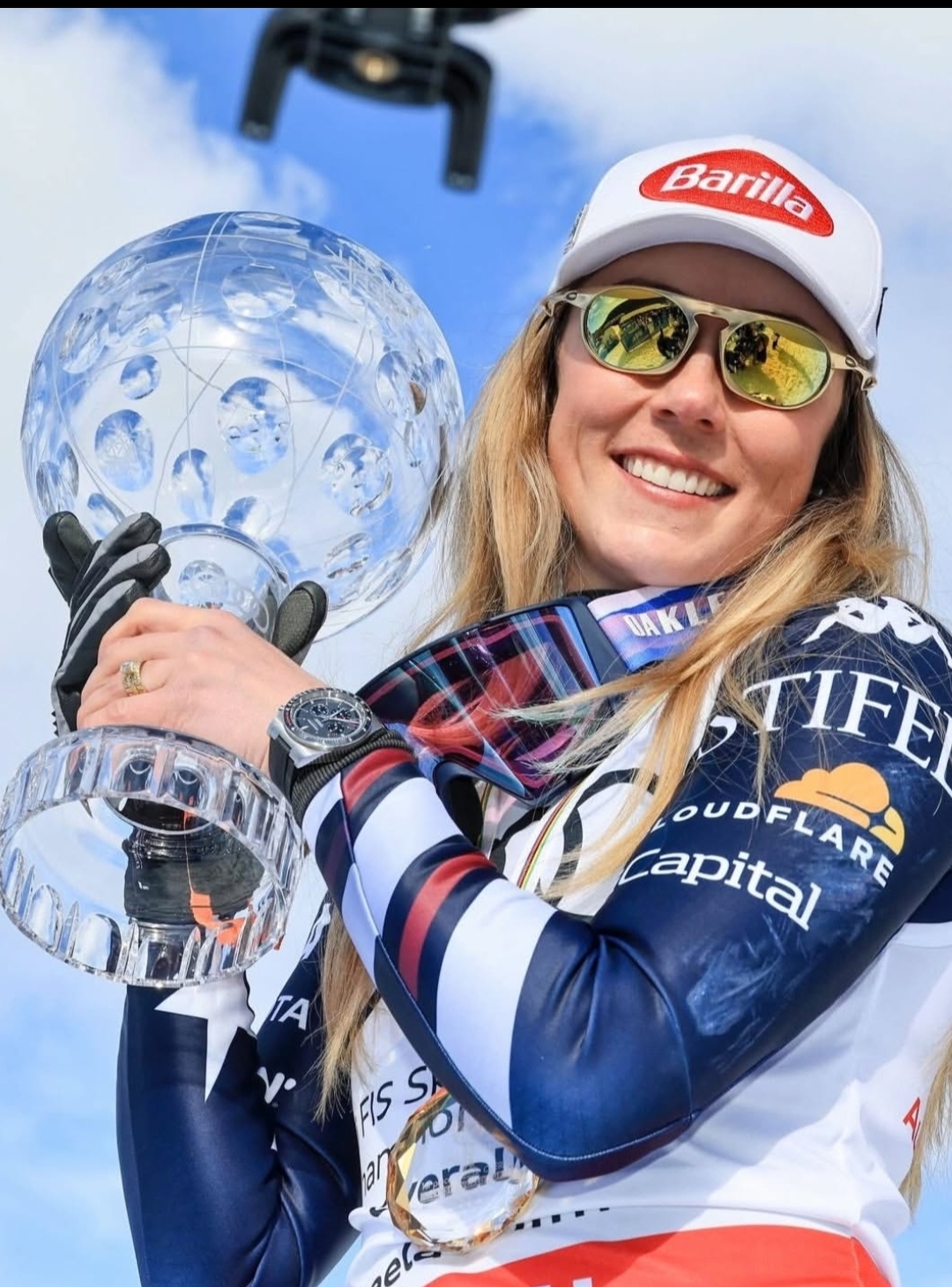
Yet six months later, the American superstar stood atop the podium at the World Cup finals in Lillehammer, hoisting the biggest prize in skiing for a record-equaling sixth time — matching the legendary Annemarie Moser-Pröll.
Even Shiffrin could hardly believe it.
“It’s a really amazing thing, but it’s also a little bit of a weird thing, the human psychology,” she said afterward. “You can’t understand it, so that’s where I am right now.”
At the season’s start, her mindset was far more grounded. “The Overall is a beautiful thing to dream about, and those dreams haven’t stopped for me,” Shiffrin said early on. “But I’m right now feeling realistic, taking the season step by step.”
Those cautious steps turned into a golden sprint.
Conventional wisdom says Overall titles are won through rock-solid consistency across every discipline — think Tina Maze’s legendary 2013 campaign, when she piled up massive points in all four events. Recent winners like Federica Brignone, Lara Gut-Behrami, and Shiffrin herself followed the same multi-discipline blueprint.
This season, Shiffrin ripped up the rulebook.
Instead of spreading herself thin, she unleashed one of the most dominant single-discipline performances in World Cup history and rode that unstoppable wave all the way to the big globe — her first since 2023.
From early-season uncertainty to final-day glory, it was a masterclass in turning doubt into dynasty-level dominance. And skiing fans everywhere are still catching their breath.
