
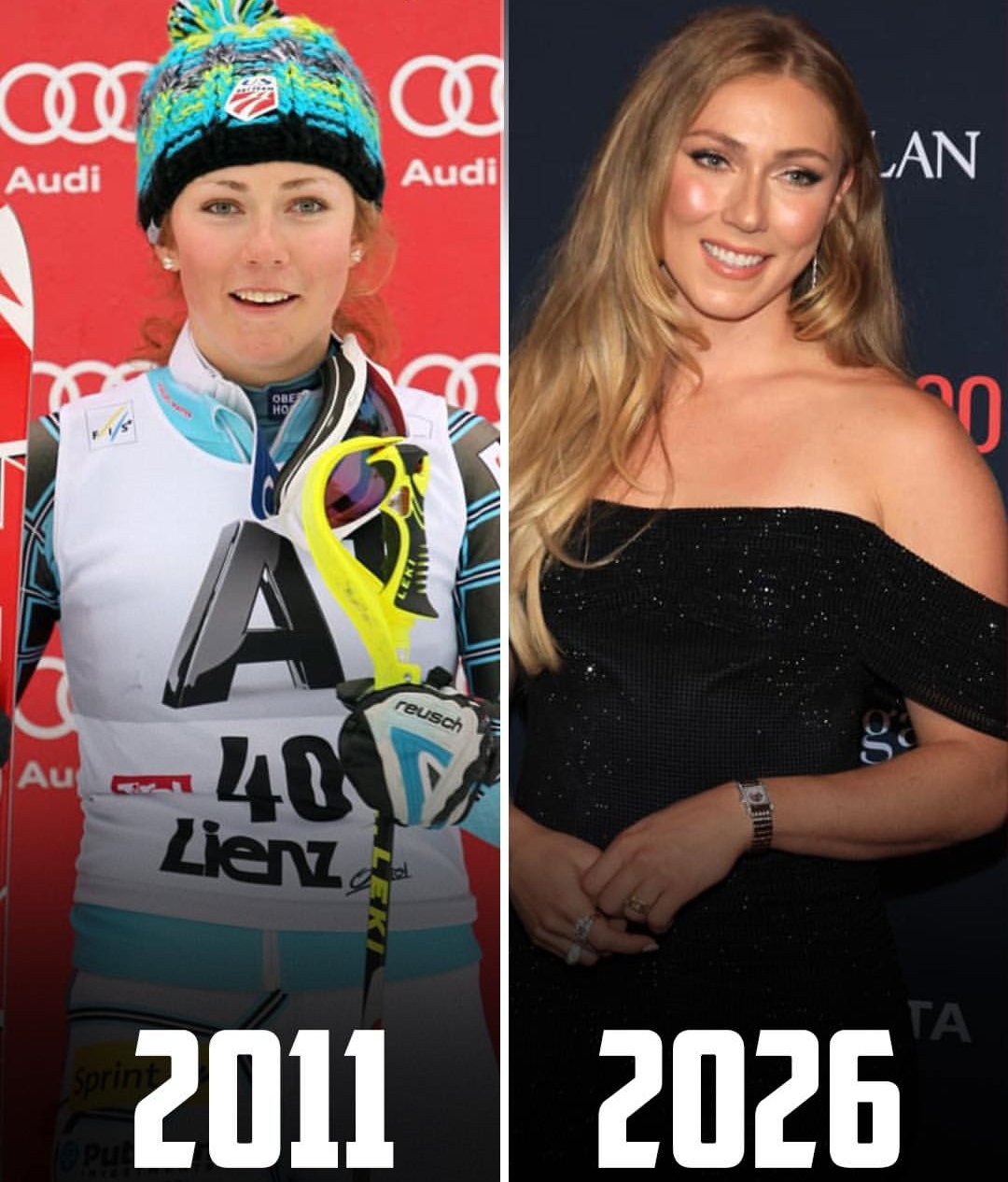
In 2011, a fresh-faced 15-year-old from Vail, Colorado, made her World Cup debut in a giant slalom at Špindlerův Mlýn, Czech Republic—barely old enough to compete and still figuring out the international circuit. Fifteen years later, at 31, Mikaela Shiffrin stands as the most successful alpine skier in history, with 110 World Cup wins, six overall titles, 15 World Championship medals (eight gold), and three Olympic golds. The transformation isn’t just about medals; it’s a complete evolution from teenage prodigy to resilient, dominant force who has rewritten the record books while navigating personal loss and injury.
Back then, Shiffrin was the high school student who finished third in her first World Cup podium at Lienz, Austria, in December 2011—starting 40th, losing a shin guard, and still charging to the fastest second run. She looked every bit the promising kid: wavy hair, youthful smile, and the wide-eyed energy of someone racing against veterans with a decade more experience. By 2012 she had her first win (Åre slalom), and by 2014 she was the youngest Olympic slalom champion in history at Sochi. The early years were pure ascent—national titles, World Championship golds, and the sense that something special was unfolding.
US skier Mikaela Shiffrin: ‘I’m just getting started’
The glow-up accelerated through the mid-2010s into full dominance. She added giant slalom, Super-G, and even downhill success, becoming one of the rare all-rounders. Six overall World Cup titles (tying the women’s record) and nine slalom titles followed. In 2023 she surpassed Ingemar Stenmark’s long-standing mark of 86 World Cup wins; by early 2026 she had reached 110 (73 of them in slalom alone) and 168 podiums. At the 2026 Milano Cortina Olympics she claimed slalom gold again—12 years after her first—becoming the first American with three alpine Olympic golds and the oldest (and youngest) U.S. woman to win alpine gold. Four Olympic medals total, and a World Championships haul that ties the modern-era record.
Visually and physically, the change is striking. The 2011 teen has become a powerfully athletic woman in her early 30s—toned from relentless training, confident in her presence on and off the snow, and carrying the polish of a veteran champion. Recent images from the 2026 Olympics show her beaming with a gold medal, American flag draped over her shoulders, the weight of history and personal battles behind the smile. She has spoken openly about the mental side of the journey: crashes (including a serious one in Killington in 2024), the 2020 death of her father Jeff, grief, and the work of showing up anyway. After winning the 2026 slalom gold she described the moment as almost “being born again,” a full-circle redemption after the disappointment of Beijing 2022.
Mikaela Shiffrin’s 2026 Olympic Gold Changed Her Legacy Forever
Now, entering the 2026-27 season, Shiffrin is shifting gears. She has called it an “exploration season,” dialing back the slalom starts that have defined her dominance and leaning more into giant slalom and Super-G. At the season opener in Sölden she led after the first run in GS before finishing seventh—still competitive, still evolving. The girl who once had to make up years of experience on the circuit is now the one setting the standard, challenging herself rather than the field.
Fifteen years on, the 2011 debut feels like a different lifetime. What began as a teenage dream on the World Cup circuit has become the greatest career in alpine skiing history—built on technical mastery, resilience, and an unmistakable glow-up that turned a promising kid into the sport’s queen.
