
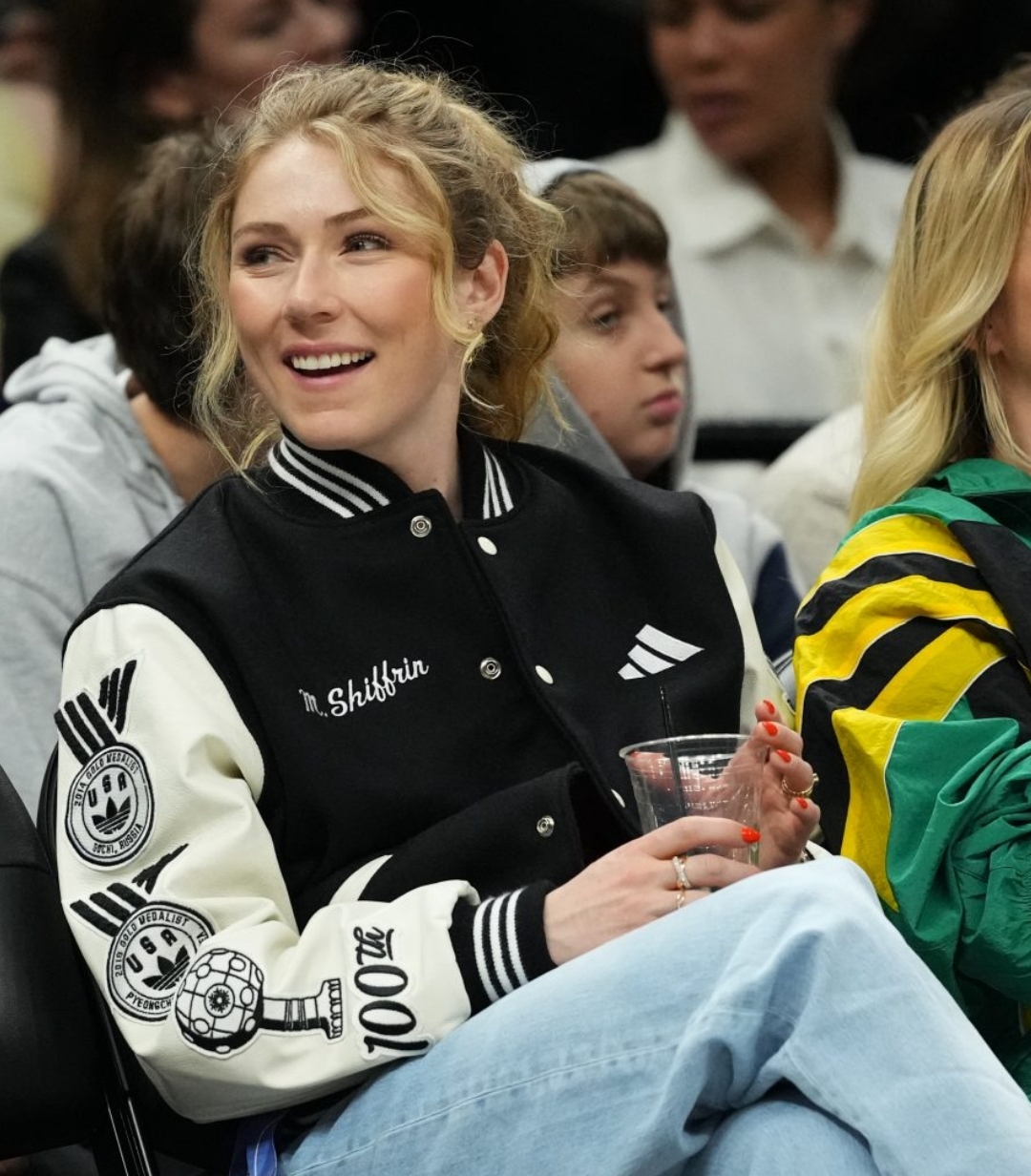
Even with 110 World Cup victories, a record-tying sixth overall Crystal Globe, and a triumphant Olympic slalom gold that cemented her as the most decorated U.S. Alpine skier in history, Mikaela Shiffrin insists she still has plenty left to explore on and off the snow.
The 31-year-old legend opened up during a candid 25-minute conversation at Copper Mountain last week, reflecting on a dominant 2025-26 season while hinting at life beyond the gates. Speaking after a private ski day with young athletes from elevateHER and kicking off a $1 million fundraising push for the ShareWinter Foundation, Shiffrin revealed that pure curiosity — not the need to prove anything — continues to drive her.
“It’s a really good question. What I know is that I’m not ready to be done yet,” she said when asked how much longer she wants to compete. “I also feel different at this time this year than I have really in any other year.”
Shiffrin capped her season in spectacular fashion, going 9-for-10 in slalom races and clinching her sixth overall Crystal Globe — matching Annemarie Moser-Pröll for the women’s all-time record. She dominated the discipline she once called her ceiling, winning by margins that left rivals in the dust, including a 1.32-second victory at the World Cup Finals.
Yet it was her performance at the Milano Cortina 2026 Winter Olympics that provided the most emotional payoff. After a disappointing Beijing 2022 where she left without a medal despite high expectations, Shiffrin delivered a masterclass in women’s slalom on February 18, winning gold by a commanding 1.50 seconds — the largest margin in any Olympic Alpine event since 1998. The victory marked her third Olympic gold and fourth medal overall, making her the most decorated American woman in the sport’s Olympic history and tying her with Julia Mancuso for the most U.S. Alpine medals.
Despite the historic haul, Shiffrin admitted the pressure was immense. Headlines constantly declared her the favorite, and the fear of criticism kept her off social media during the Games. She leaned on her psychologist for group sessions with her inner circle to combat feelings of isolation and described the Olympic environment as uniquely “heated” and intense.
“There’s my very, very best, highest-coordination skiing that takes every ounce of energy I have. And there’s the next level lower, which is literally at least a second and a half slower,” she explained. “The toughest thing about it was that the whole world — every headline, everything that anyone said — was, ‘expected to win.’”
Now back home in Edwards, Colorado, after months on the road — including stops in New York and a Disney+ premiere of “On the Edge” — Shiffrin is easing into the off-season. She heads to Mammoth, California, for a ski camp this week and expressed excitement about returning to drills and gates. At the same time, she’s increasingly pondering life beyond racing.
“I am thinking about what life has to offer beyond the sport,” she said, pointing to community work like her ShareWinter involvement and time spent answering questions from 14-year-olds about her own childhood dreams, from driveway skiing at age 2 to wishing for an electric go-kart at Christmas.
Her brother and sister-in-law’s recent baby has sparked new reflections on family. While she and partner Aleksander Aamodt Kilde both want children, the demands of elite racing have kept them from staying in one place for more than a month at a time. “I can’t imagine having a child right now,” Shiffrin noted, “but I also can imagine that desire coming pretty fast and pretty suddenly.”
She acknowledged the physical realities of turning 31: three consecutive training days now feel challenging where six once came easily. In slalom, she believes she has reached her speed ceiling, though she remains curious about pushing limits in giant slalom and super-G.
Ultimately, Shiffrin’s motivation remains rooted in the same quality that propelled her from a young Ski and Snowboard Club Vail athlete to the greatest of all time: curiosity.
“I think mainly it’s the curiosity about how much better I can get,” she said. “As long as I’m going to do it, I need to be fully fit, fully mentally immersed — mentally prepared, physically prepared — and inspired. Curious about how fast I can go.”
At a ShareWinter event designed to inspire the next generation, Shiffrin stressed that hard work and fun are not mutually exclusive — a lesson drawn from her own upbringing. She hopes to pass on that balance, along with a love for the sport that extends beyond elite competition.
“At some point, I may feel like I’m just not curious anymore about any of it,” she reflected. “And that’s probably when I’m going to say, ‘alright.’ Because I’m curious about a lot of other things in life.”
For now, that curiosity keeps the GOAT carving turns — and inspiring others — with the same precision and passion that defined one of the most remarkable seasons in Alpine skiing history.
