
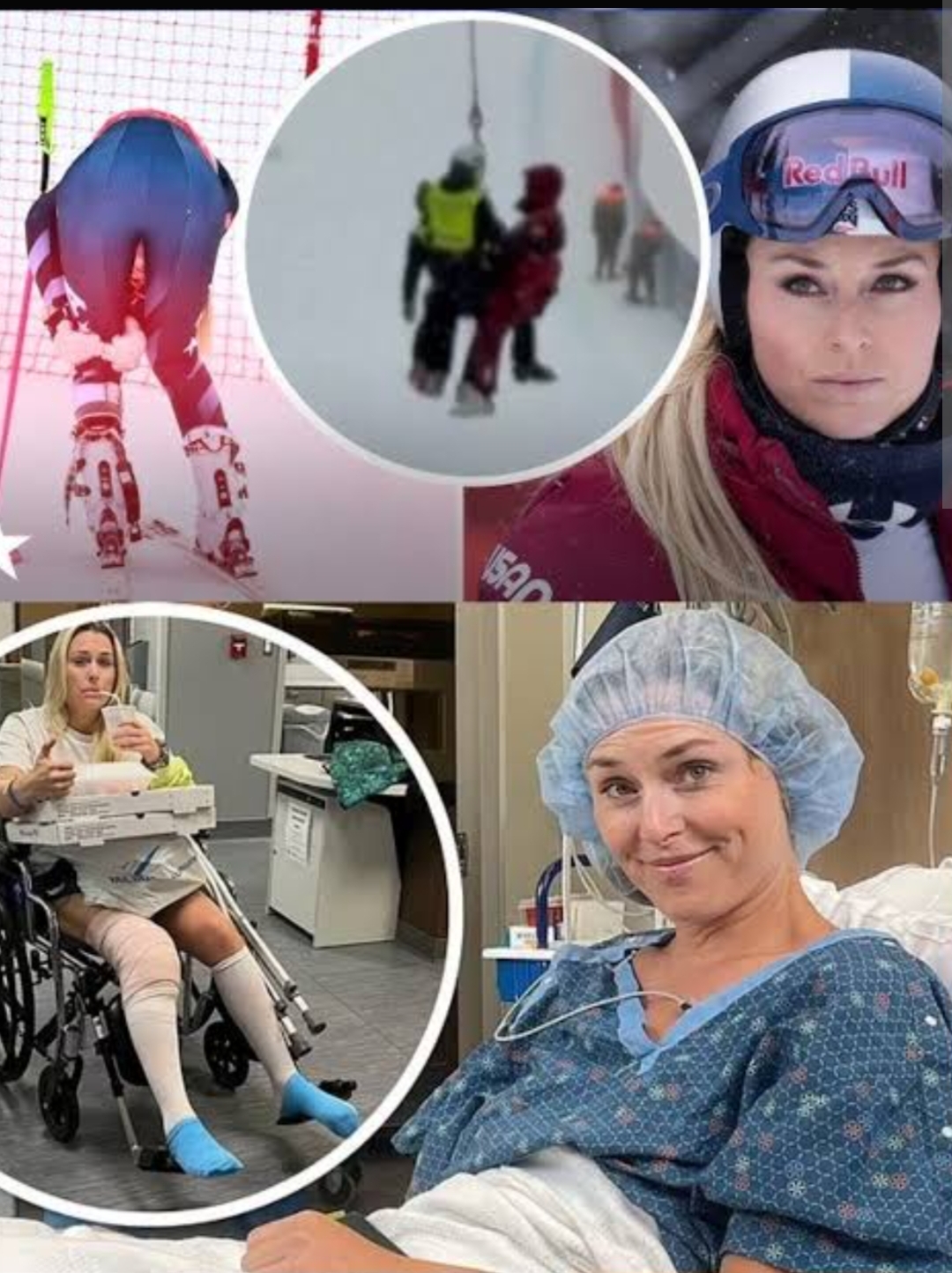
On February 8, 2026, millions of Americans who had gone to bed buzzing with excitement over Lindsey Vonn’s long-awaited Olympic comeback woke up to devastating footage that spread like wildfire across social media and morning news shows.
The 41-year-old skiing icon, competing in her fifth and final Winter Games in Milano Cortina, crashed violently just 13 seconds into the women’s downhill on the demanding Olimpia delle Tofane course in Cortina d’Ampezzo, Italy. Clipping a gate midair, Vonn lost control, tumbled down the slope, and let out audible screams of agony as medical teams rushed to her side. She was airlifted off the mountain and later diagnosed with a complex left tibia fracture, additional injuries including a broken right ankle, and complications that required multiple emergency surgeries — one of which doctors said nearly resulted in amputation of her leg.b3a4df
While the crash unfolded live in the early afternoon Italian time — prime viewing hours for European audiences — most of the United States was still asleep due to the significant time difference. Many fans on the East Coast were waking around 6 a.m., while those on the West Coast faced the shocking images as early as 3 a.m. By breakfast time across the country, the dramatic footage dominated cable news, streaming platforms, and social feeds.af7dab
NBC’s overall coverage of the 2026 Winter Olympics averaged a strong 23.5 million viewers daily across broadcast and streaming — a 12-year high and nearly double the numbers from Beijing 2022. Vonn’s high-profile comeback story had been a major ratings driver leading into the Games, with analysts crediting her star power for boosting interest in alpine skiing. The crash itself became one of the most replayed and discussed moments of the Olympics, amplifying the emotional impact as replays, slow-motion analysis, and fan reactions circulated rapidly.a8e2ee
Social media erupted with a mix of shock, concern, and nostalgia. Millennials who grew up watching Vonn dominate the slopes in the late 2000s and early 2010s shared memories of her four World Cup overall titles and 2010 Olympic gold, while others debated the risks of her competing with a recently torn ACL. Clips of the crash, her visible pain on the snow, and the stunned silence from the crowd (which included celebrities like Snoop Dogg) racked up millions of views within hours.5f2a74
In the days and weeks that followed, Vonn provided updates from her hospital bed and later from home in the United States, where she continued intensive rehabilitation. She underwent several surgeries in Italy before being transferred back for further treatment. Despite the severity — describing the injury as her leg being “in pieces” — Vonn has repeatedly emphasized resilience and gratitude.
“While yesterday did not end the way I had hoped… I have no regrets,” she posted shortly after the incident, adding that standing in the Olympic starting gate was a dream come true.
As of mid-April 2026, Vonn continues her recovery “one day at a time,” focusing on long-term healing ahead of potential additional ACL surgery. She has expressed hope of one day standing on a mountain again, though no timeline for any return to skiing — even recreational — has been set.
The heart-wrenching crash served as a stark reminder of the physical toll of elite alpine skiing, especially for a veteran pushing boundaries at 41. Yet it also highlighted Vonn’s enduring legacy: a champion whose determination inspired millions, even in defeat. Her story transformed what could have been a quiet Olympic moment into a nationwide conversation about risk, resilience, and the unbreakable spirit of athletes who refuse to fade quietly.
For many Americans who experienced the news in delayed waves that Sunday morning, the images of Vonn’s fall became more than just sports drama — they were a raw, human moment that united fans in empathy and admiration for one of the greatest skiers of all time.
