
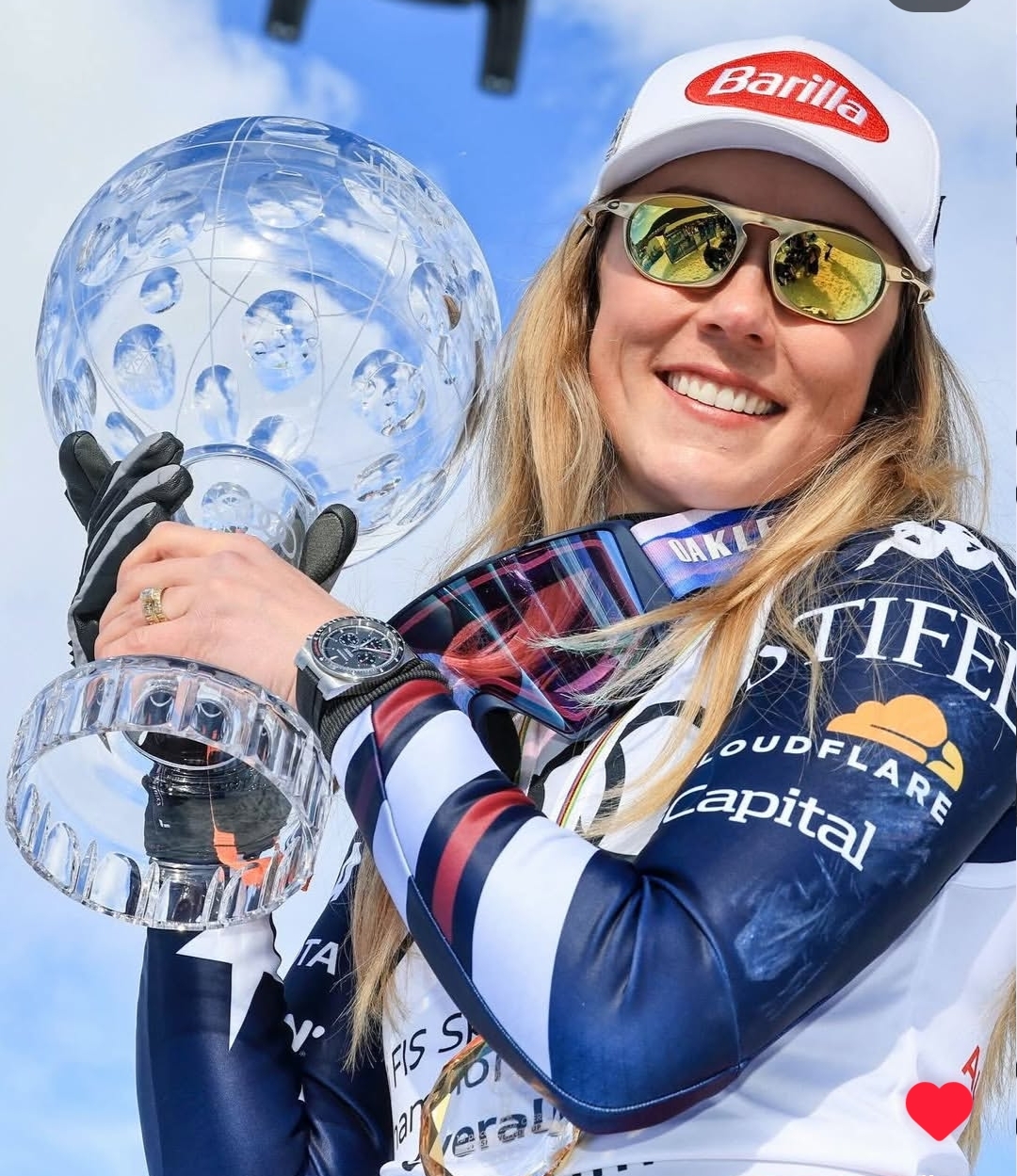
At 31, Mikaela Shiffrin has added yet another dominant chapter to a career already regarded as the most successful in alpine skiing history — and she insists she is still driven by something simple: curiosity.
The American ski superstar completed a historic 2026 season by winning the overall World Cup title, taking Olympic slalom gold in Cortina, and securing another slalom crystal globe. It marked her sixth overall crown and further extended a record that now includes 110 World Cup victories and 168 podium finishes.
What makes the numbers even more striking is her efficiency at the top: more than 100 of those podiums are victories, a conversion rate unmatched in modern skiing.
Despite the record-breaking season, Shiffrin downplayed talk of legacy and instead pointed to her mindset.
She explained that her motivation still comes from “improving day by day” rather than chasing milestones, saying that real progress happens in training and repetition, not just race results.
But this season also demanded adaptation. Shiffrin revealed that as she gets older, she has had to adjust her training expectations and better understand her body’s limits, particularly managing fatigue and injury risk across a long season.
That shift influenced her approach in 2026. With Olympic preparation taking priority, she focused almost entirely on technical events like slalom and giant slalom, stepping back from speed disciplines such as Super-G.
Even with a narrower program, the pressure remained intense. Germany’s rising star Emma Aicher pushed the overall standings deep into the season with strong performances across multiple disciplines, including Super-G and downhill wins.
Shiffrin, however, separated herself through dominance in slalom, winning nine of ten races in one of her most consistent runs ever — including Olympic gold.
She credited her success not just to speed, but to technical clarity and consistency, saying she was able to reach top-level skiing faster and repeat it more reliably than in previous seasons.
Still, she admitted the intensity came at a cost, describing the constant demand for peak performance as “rewarding, but exhausting,” and suggested that a season of that intensity is unlikely to be repeated.
Beyond the slopes, Shiffrin also emphasized the mental preparation behind her Olympic success, revealing she worked extensively on managing pressure, expectations, and emotional balance. Her build-up included group sessions with her full team to strengthen unity heading into the Games.
The result was a season that delivered both performance and perspective: Olympic gold, another overall title, and a reinforced sense of control over how she competes at the highest level.
Now firmly in her 30s, Shiffrin’s evolution is clear. She is no longer just dominating skiing — she is reshaping how sustained excellence is achieved in the sport.
And yet, according to her, the driving force remains unchanged: a constant search for better turns, better feeling, and better skiing — one run at a time.
