
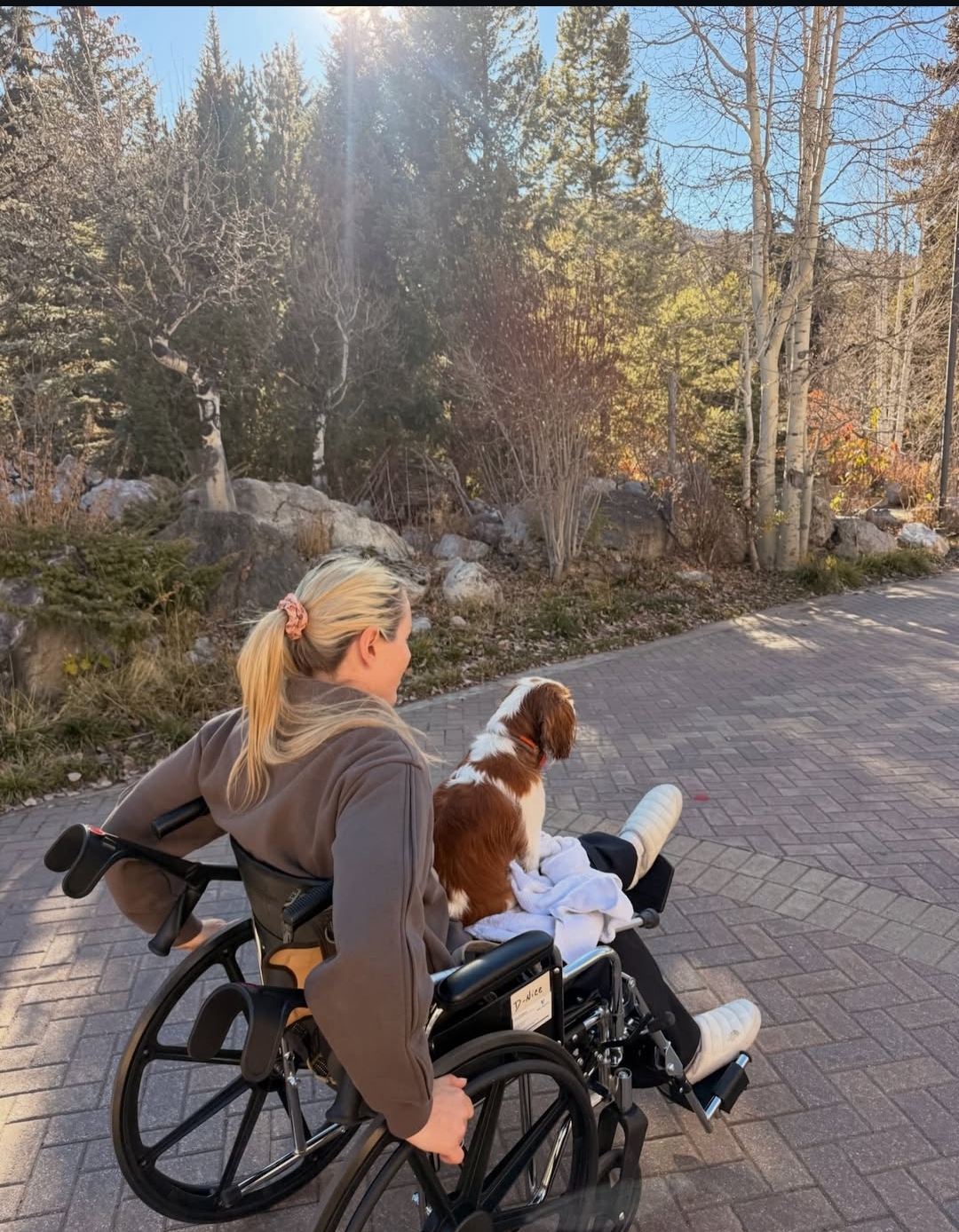
Lindsey Vonn’s path back from a catastrophic crash at the 2026 Milan-Cortina Olympics remains one of the most complex recoveries in modern alpine skiing, defined by a delayed ACL reconstruction, extensive hardware, and the lingering effects of near-amputation-level trauma. After her ninth surgery in early November, the 42-year-old legend faces another six to nine months of rehabilitation before she can realistically assess a return to the snow—competitive or otherwise.
The complications stem from a perfect storm of injuries. On January 30, 2026, Vonn completely ruptured the ACL in her left knee during a World Cup downhill in Crans-Montana. She chose to race the Olympic downhill nine days later anyway. Just 13 seconds into her run on February 8 at Cortina, she crashed violently, suffering a complex compound fracture of the left tibia (including the tibial plateau), additional damage to the fibular head, a broken right ankle, and compartment syndrome that required an emergency fasciotomy. That procedure, performed by Team USA surgeon Dr. Tom Hackett, literally opened the leg to relieve pressure and saved it from amputation.
Surgeons initially stabilized the shattered bone with multiple titanium plates and as many as 15–20 screws. Those implants made it impossible to reconstruct the ACL until the bone had fully healed—a process that took roughly nine months. Only then, around November 9, 2026, could doctors remove the hardware and finally rebuild the ligament. Vonn herself described the trade-off: the bone healing was “great news,” but removing the screws creates new holes that must fill in, and the ACL graft still needs the standard six-to-nine-month maturation period. She has called the procedure her ninth since the crash and is “praying” it is her last.
Orthopedic specialists note that while a straightforward ACL reconstruction in an otherwise healthy knee often allows return to sport in 6–12 months, Vonn’s case is layered. The prior high-energy fracture, soft-tissue trauma from the fasciotomy, residual bone defects from hardware removal, and her long history of knee surgeries (including a partial replacement on the opposite knee) all raise the risk of stiffness, muscle atrophy, and slower graft incorporation. Elite downhill skiing adds further demands on rotational stability, impact absorption, and confidence at extreme speeds.
Vonn has been open about the timeline and her mindset. She expects roughly four weeks on crutches after the latest surgery, followed by progressive strengthening. Full recovery is projected at six to nine months from the November procedure—placing a realistic window for basic function in mid-to-late 2027. She has repeatedly said she will not close the door on racing and remains on the U.S. team roster, but she insists she must feel “100 percent” and get back on the mountain before making any decision. Recreational skiing could come sooner once her medical team clears her; a competitive return, if it happens at all, would almost certainly target the 2027-28 season at the earliest.
For now, Vonn is focused on the daily work of healing—“one step at a time.” The recovery is complicated precisely because the injuries were so severe and sequential: bone first, ligament later, and an entire career’s worth of prior damage in the background. Whether she ever races again remains an open question that only time, strength, and her own assessment on snow can answer.
