
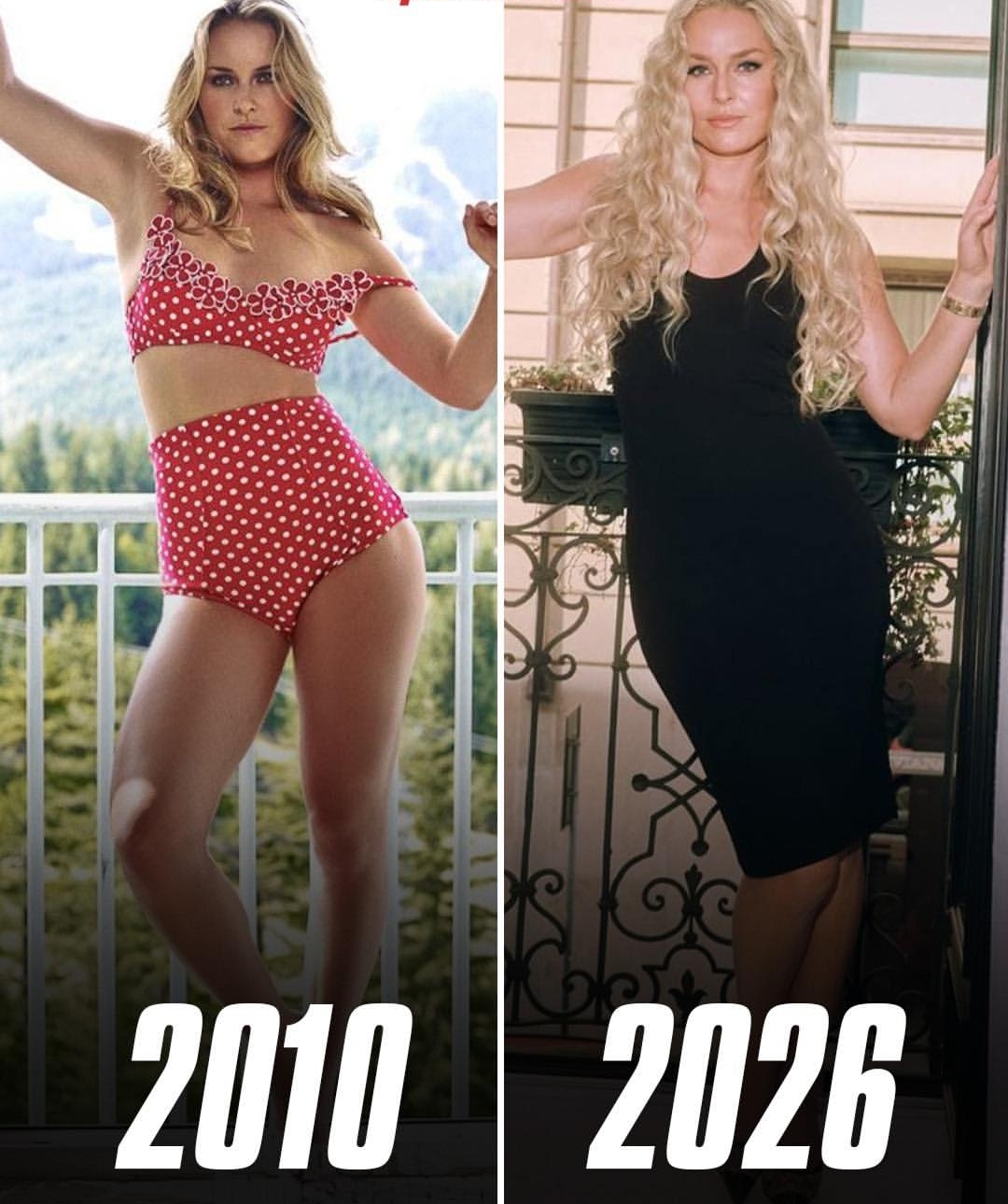
The American skiing legend who once dominated magazine covers in a bikini has spent the past 16 years redefining what athletic power and high fashion look like together.
In 2010, Lindsey Vonn was already one of the most recognizable faces in winter sports. Fresh off Olympic downhill gold in Vancouver—the first ever won by an American woman—she appeared in the Sports Illustrated Swimsuit Issue, delivering the kind of high-impact, athletic glamour that made her an instant crossover star. The images captured a young champion at the height of her physical peak: powerful, confident, and fully aware of the camera.
Sixteen years later, the same athlete is projecting a different kind of presence. In September 2026, while still recovering from the severe leg injuries sustained in a crash at the Milano-Cortina Olympics, Vonn walked the L’Oréal Paris runway beneath the Eiffel Tower during Paris Fashion Week. The setting was elegant rather than athletic—open-air, high-fashion, and surrounded by established models and celebrities. Coverage noted the shift: less raw physical display, more refined confidence and poise.
The contrast is striking, yet the through-line is continuity. Vonn has never treated media appearances as separate from her athletic identity. Over the years she has moved from the early swimsuit and sports-advertising era into Time magazine covers, luxury brand partnerships, her own skiwear line with HEAD, and carefully chosen campaigns that emphasize resilience and longevity. The 2026 runway moment, coming months after a crash that nearly cost her a leg, underscored that evolution. She was no longer simply the downhill speed queen posing for a swimsuit shoot; she was an established figure who could command a fashion stage while still in active rehabilitation.
At 41 (turning 42 this month), Vonn’s public image has matured alongside her career. The bold, physical presentation of 2010 reflected an athlete arriving at the top of the sport. The more composed elegance of 2026 reflects someone who has outlasted injuries, retirements, and comebacks, and who now chooses how she appears as deliberately as she once chose race lines. Both versions have been effective. Together they illustrate a rare consistency: the ability to remain visually dominant across different eras and formats while the athletic résumé continues to speak for itself.
Whether she returns to World Cup racing remains uncertain. What is already clear is that Lindsey Vonn’s evolution—from the swimsuit covers of 2010 to the refined presence of 2026—has been as deliberate and successful as her racing career. In both arenas, the standard she set has proven difficult to match.
