
By any measure, Lindsey Vonn is one of the most decorated and resilient athletes in Winter Olympic history. With 82 World Cup victories, four overall titles, and an Olympic gold medal to her name, the 41-year-old American skiing legend has stared down injuries, depression, retirement, and a remarkable comeback at an age when most athletes have long hung up their skis. Yet her latest battle—one that began with a horrifying crash just 13 seconds into the women’s downhill at the 2026 Milano Cortina Winter Olympics—may represent her toughest challenge yet: not chasing another podium, but reclaiming her health, mobility, and peace of mind.
On February 8, 2026, Vonn clipped a gate early in her run on the demanding Tofane course in Cortina d’Ampezzo. The impact sent her tumbling violently, resulting in a complex fracture of her left tibia, compartment syndrome, and further damage to an already torn ACL she had suffered just days earlier in a World Cup event. Doctors warned the injury was so severe that amputation of the leg was a real possibility. Airlifted off the mountain, she underwent four surgeries in Italy before a fifth upon her return to the United States. For nearly two weeks, she remained largely immobile in a hospital bed.
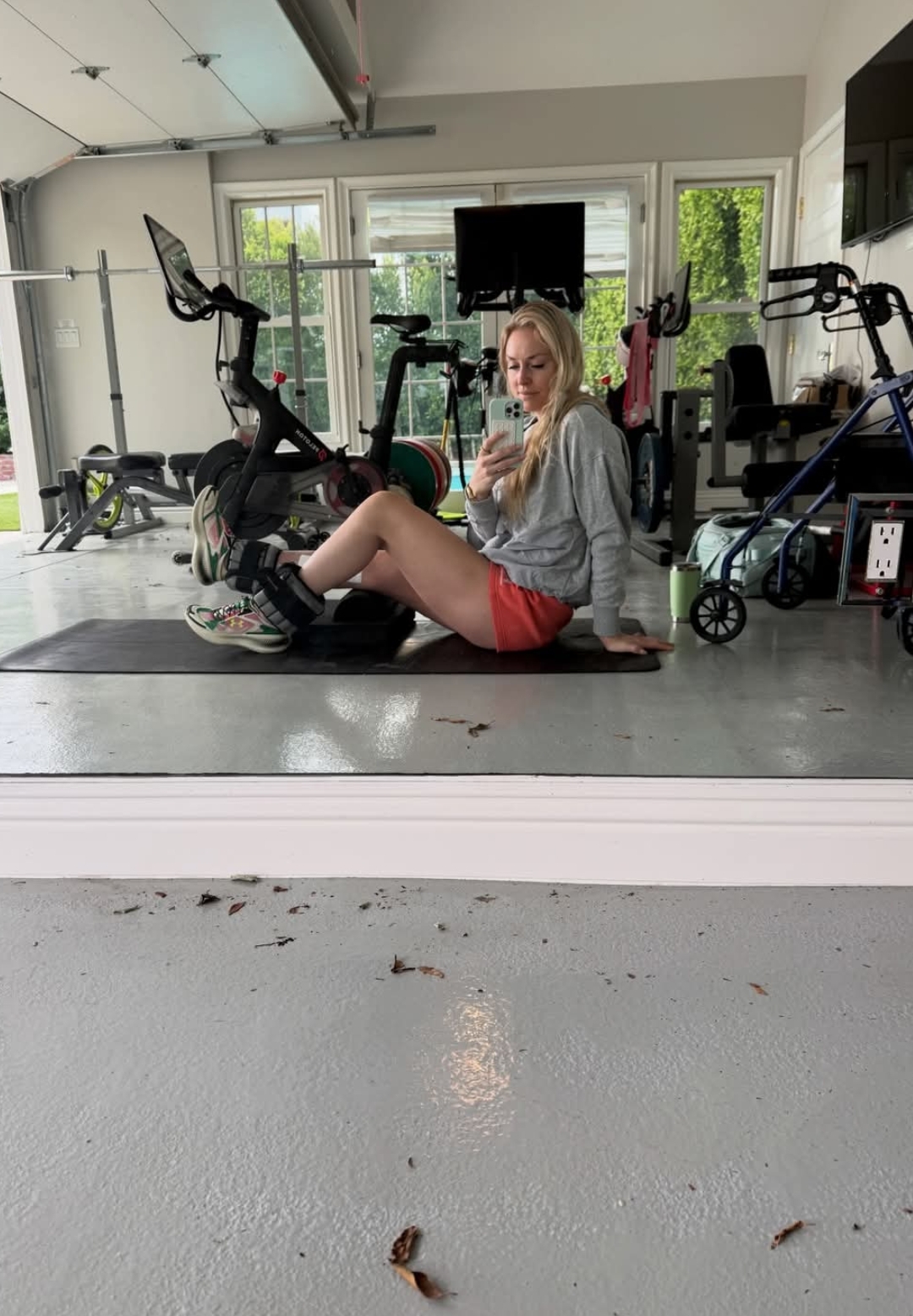
In the months since, Vonn has chronicled her recovery with characteristic honesty and grit on social media. She celebrated leaving the hospital, moving to a hotel, then finally returning home to Colorado. She nicknamed her three-wheeled scooter “Speedy” and shared videos of incremental progress: transitioning from a wheelchair to crutches, beginning stationary bike work, and—remarkably—just over a month after surgery, completing six unassisted pull-ups in the gym. “First set of pull ups post surgery… slowly getting there!” she captioned the viral clip.
Her daily routine is relentless: hours of physical therapy, time in a hyperbaric chamber, gym sessions, cold plunges, and sauna work. Bone healing is expected to take up to a year, with potential additional surgery to remove hardware before addressing the ACL. Yet Vonn has emphasized that the mental side of recovery has been equally grueling. “The physical battle began the second I got hurt but the mental battle started today,” she posted early on. “It hit me like a ton of bricks… the battle of the mind can be dark and hard and unrelenting.” In interviews, she has described “ups and downs” and called this her slowest and most challenging recovery to date, both physically and mentally.
Despite the pain and uncertainty, Vonn appears radiant in recent photos, stunning fans with a glowing Instagram image that signals her fighting spirit remains intact. She credits past setbacks—including multiple career-threatening injuries and her battle with depression—with building the mental tools she now relies on. Her support network, including her dogs and a disciplined self-care regimen, has been crucial.
When asked about her skiing future, Vonn has been measured but not definitive. She slammed speculation that she must immediately choose between retirement and a comeback, insisting her sole focus now is healing and “getting back to normal life.” Still, she has left the door “slightly open,” telling Vanity Fair she doesn’t like to close doors because “you just never know what’s going to happen.” At 41, having already achieved an improbable return to world-class form after six years away, she knows better than most that timelines can shift.
For a woman who has spent her career conquering the world’s most dangerous slopes and defying expectations, this chapter is different. The win she is chasing now isn’t measured in hundredths of a second or Olympic medals. It’s measured in small, hard-earned steps: standing without assistance, rebuilding strength, and quieting the darker voices in her mind.
“No matter how hard I get knocked down I will always find a way to get back up,” Vonn has said. One day, one rep, one determined step at a time, the comeback queen is proving once again that her greatest victories may not always happen on the mountain.
