
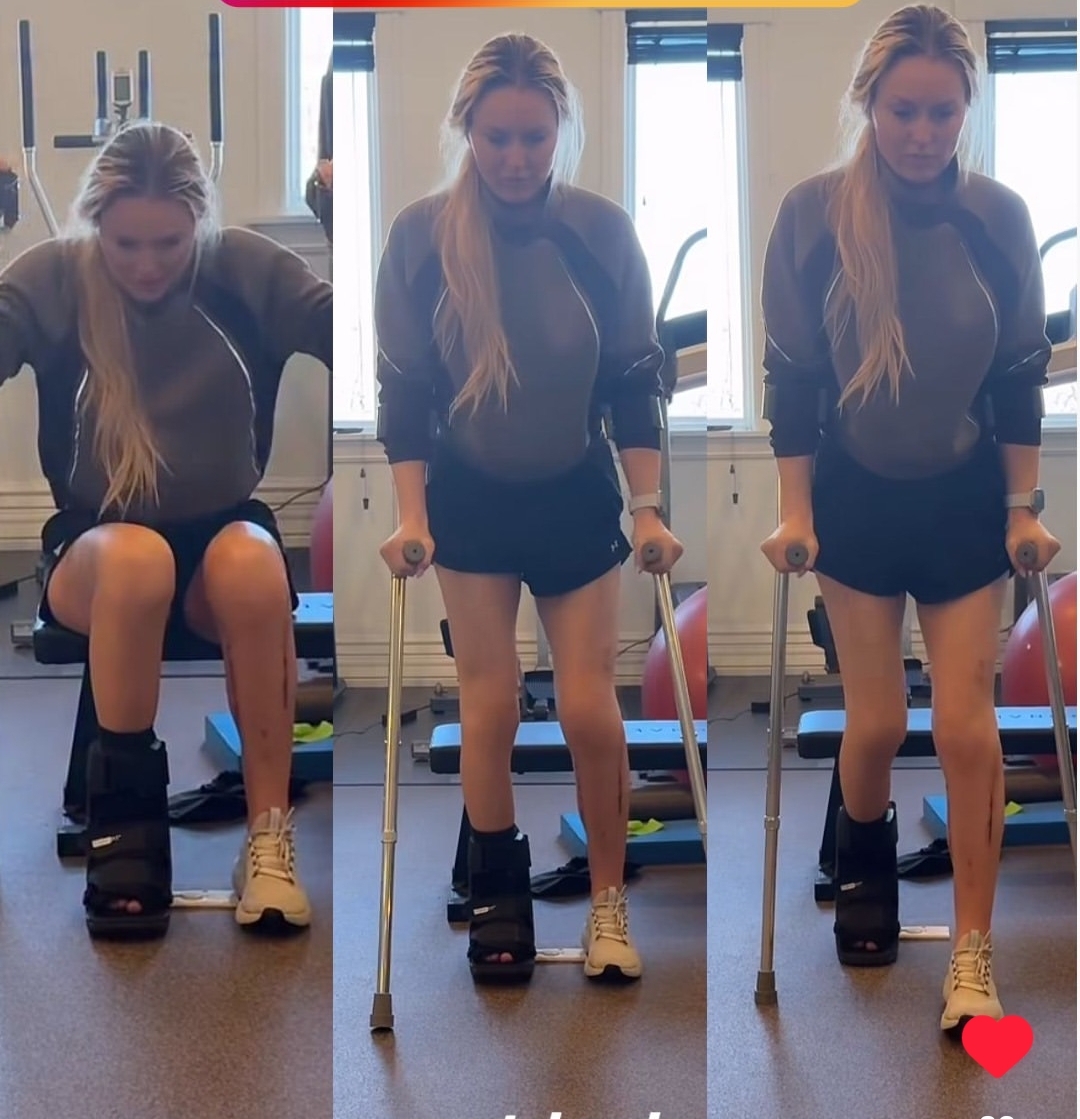
In a raw and revealing new update, alpine skiing legend Lindsey Vonn has described the excruciating reality of her ongoing recovery from the horrific leg crash at the 2026 Winter Olympics, admitting the pain in her injured knee has reached “bone on bone” levels — forcing her to walk out of a recent rehabilitation session.
The 41-year-old Olympic champion, who suffered a complex left tibia fracture, broken right ankle, and multiple complications just 13 seconds into her downhill run in Cortina d’Ampezzo on February 8, shared the candid moment as she continues intensive rehab more than two months later.
Vonn explained that despite multiple surgeries — including emergency fasciotomies to save her leg from amputation and hardware placement to stabilize the shattered bones — the chronic wear in her knee, compounded by the fresh trauma, has left her joint in a severely degraded state.
“It’s bone on bone right now,” she narrated in the video update. The phrase echoes the advanced osteoarthritis she has battled for years, previously leading to a partial knee replacement, but now intensified by the Olympic crash that also involved a completely ruptured ACL.
She described pushing through a tough rehab exercise when the pain became unbearable, prompting her to step away. Vonn emphasized that without sufficient muscle support around the joint, the direct bone-on-bone contact creates “unreal painful” friction, making even basic movements a challenge. She stressed the importance of targeted strengthening to manage the discomfort, a lesson she learned from years of managing knee issues.
This latest revelation comes as Vonn continues progressing from crutches and limited weight-bearing toward greater mobility. She has celebrated small wins, including gym sessions with modified pull-ups and time on a stationary bike, while preparing for potential additional surgery to address her ACL and remove hardware once bone healing advances (projected up to a year).
Despite the setbacks, Vonn has repeatedly voiced “no regrets” about competing at the Olympics and maintains a determined outlook. She credited her medical team, particularly Dr. Tom Hackett, who saved her leg through swift intervention for severe compartment syndrome.
Fans reacted strongly to the update, flooding her social media with messages of support and admiration for her transparency. Many drew parallels to her past comebacks, including the knee replacement that allowed her to return to competition.
Medical experts note that “bone-on-bone” contact in the knee often signals advanced cartilage loss, leading to significant pain and limited function — especially devastating after a major fracture that spans the joint area. Vonn’s long history of high-impact injuries has accelerated joint degeneration, making her recovery particularly demanding at age 41.
As of mid-April 2026, Vonn remains focused on healing “one day at a time,” avoiding aggressive timelines for any return to skiing — competitive or recreational. Her latest narration highlights the hidden physical toll behind her resilient public image: the champion who refuses to quit, even when the pain forces her to walk away temporarily.
Vonn’s openness continues to inspire athletes and fans alike, shining a light on the long, often invisible battle of post-injury recovery in elite sports. While her Olympic dream ended in seconds, her fight to reclaim mobility and strength is far from over.
