
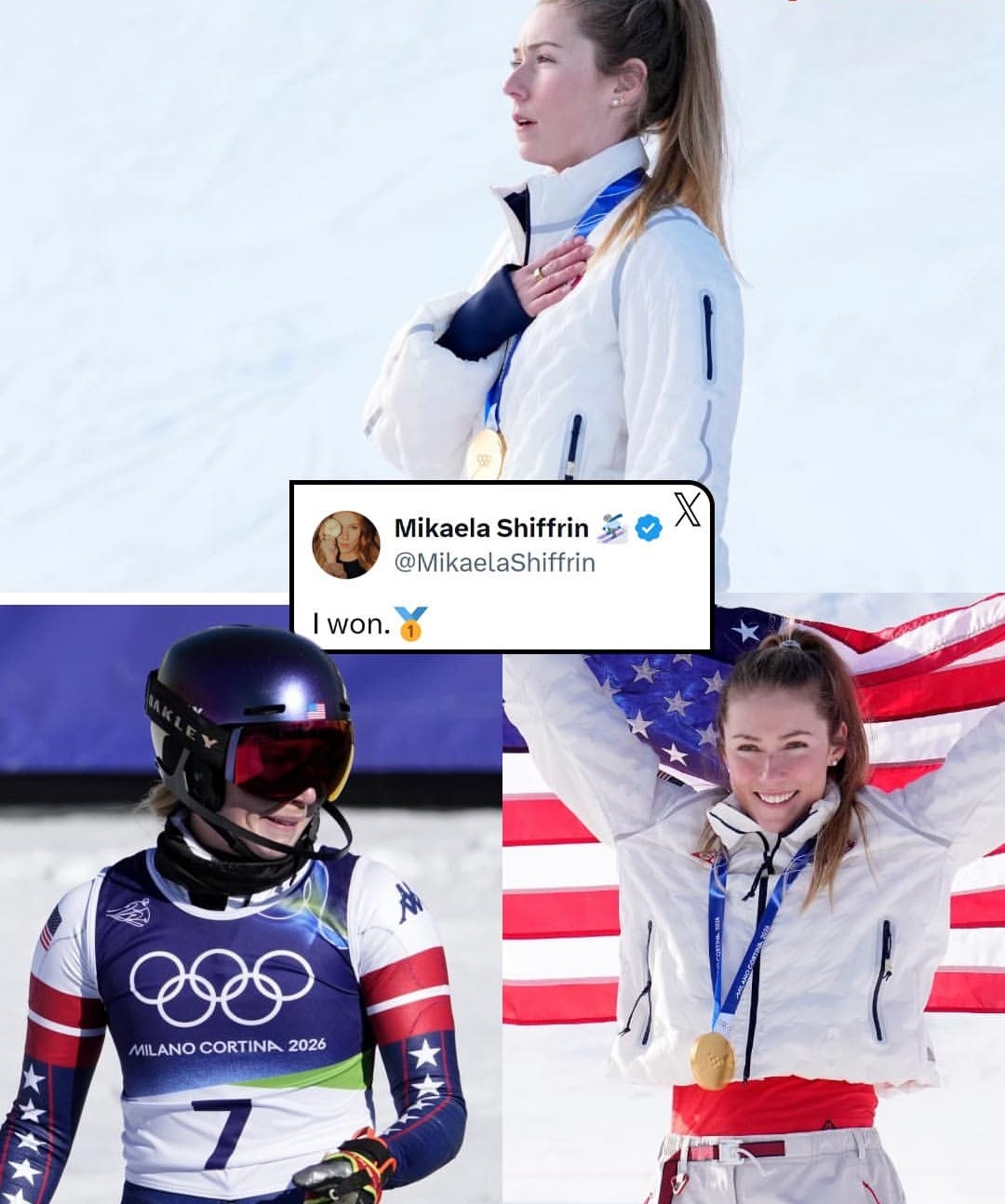
On a cold February afternoon in the Dolomites, Mikaela Shiffrin did not just win the women’s slalom. She closed an eight-year Olympic silence with a performance that left the rest of the world skiing for second place.
On February 18, 2026, at the Milano Cortina Winter Games, the American posted a combined time of 1:39.10 and won gold by 1.50 seconds — the largest margin in any Olympic alpine event since 1998. Switzerland’s Camille Rast took silver in 1:40.60. Sweden’s Anna Swenn Larsson claimed bronze in 1:40.81.
It was Shiffrin’s third Olympic gold, after slalom in Sochi in 2014 and giant slalom in PyeongChang in 2018, and her first Olympic medal since 2018. It was also the moment she put the ghost of Beijing behind her.
A lead that never looked in doubt
Shiffrin attacked from the first gate. Her opening run of 47.13 gave her a 0.82-second advantage, the biggest first-run margin in an Olympic women’s slalom since 1960. Only Germany’s Lena Dürr stayed within a second. Everyone else was already chasing a race that had effectively been decided.
The second run was not a cruise. Shiffrin skied 51.97, and teammate Paula Moltzan was actually faster on that leg. It did not matter. The cushion from run one held, and Shiffrin crossed the line as Olympic champion again — the only American in alpine skiing history with three Olympic golds.
The path to that finish had been anything but smooth. At these Games she had already missed the podium in the team combined and the giant slalom. Four years earlier in Beijing she had failed to finish her main events and left without a medal. The pressure on the final day was real. She met it with the cleanest skiing of her Olympic career.
“This whole time, I’ve been waiting for two times, 45 seconds today to be able to ski,” she said afterward. “And I’m so happy to be able to do the right thing in the right moment.”
The comeback that rewrote the story
Shiffrin arrived in Cortina as the overwhelming favorite, having won seven of eight World Cup slaloms that season and later claiming her ninth slalom crystal globe. Favorites still have to finish. In a sport where one hooked tip ends a day, she finished both runs without drama and with a margin that looked almost unfair.
The emotion at the finish was immediate. Cameras caught her fighting tears, a reaction that commentators linked in part to her late father. For a skier who had spent years answering questions about unfinished races, the gold was less a coronation than a release.
Rast’s silver was the first Olympic medal of her career. Swenn Larsson, at 34, became the oldest medalist in Olympic slalom history. Both skied well. Neither was close.
Why the moment still lands
Months later, the image has not faded: Shiffrin in the start gate, the Dolomite light, a first run that broke the field, and a finish-line roar that belonged to a champion who had waited eight years to hear it again. She has since called the new World Cup season an “exploration,” planning fewer slalom starts and more time in giant slalom and super-G. That only sharpens the memory of Cortina. On the day it mattered most, in the discipline she has owned for more than a decade, she was untouchable.
A golden moment. One the sport will simply never forget.
