
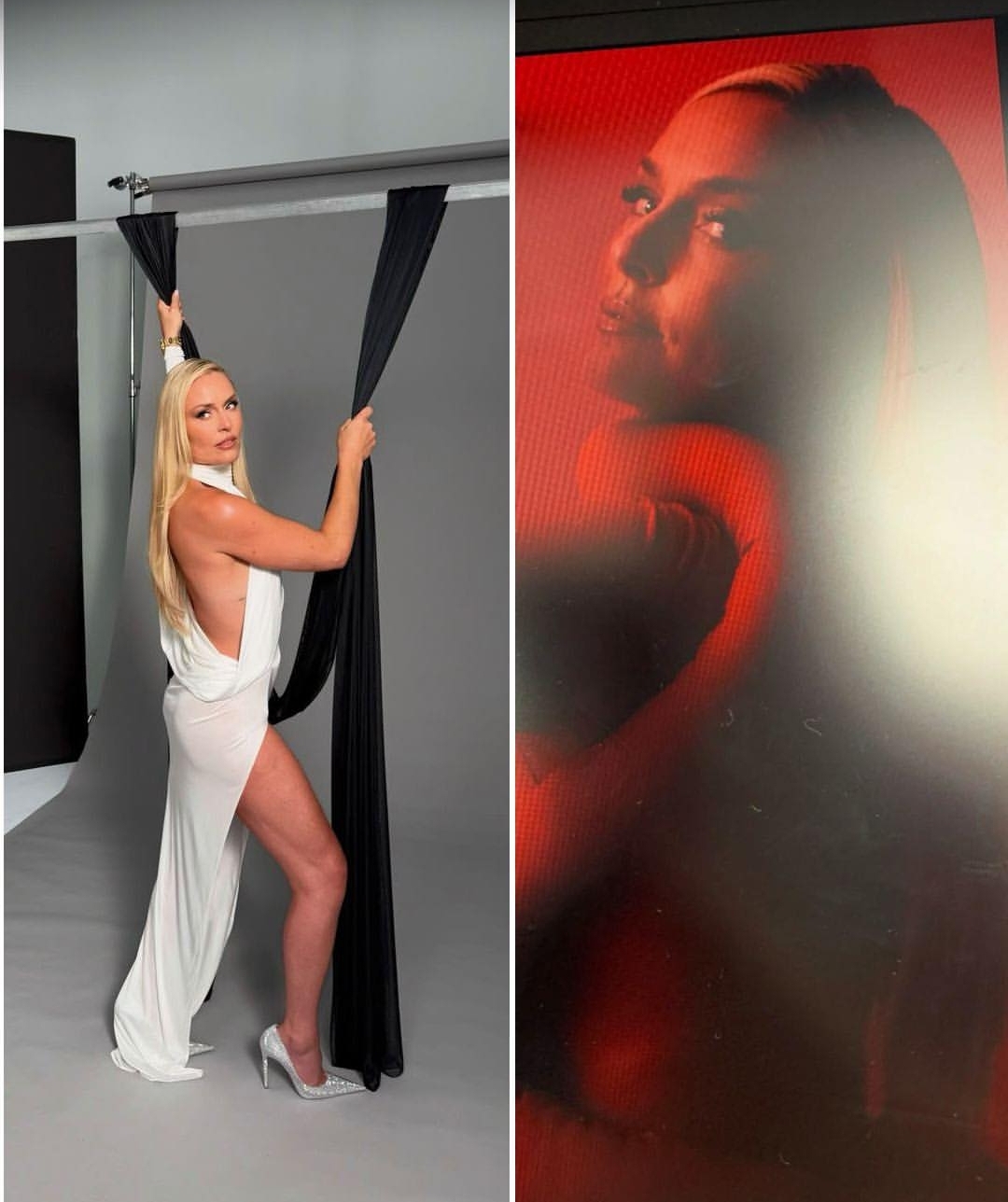
From downhill records to magazine covers, fashion-week runways, and brand empires, the American skiing legend continues to own every arena she enters—even while recovering from a career-threatening crash.
Lindsey Vonn has spent two decades proving she can outrace almost anyone on snow. With 84 World Cup victories, four overall titles, 20 Crystal Globes, three Olympic medals (including the first downhill gold ever won by an American woman), and a long list of records in the speed events, she is one of the most decorated alpine skiers in history. What has become equally clear is that her command does not stop at the finish line. Vonn has built a parallel career of comparable force in front of the camera, turning the same intensity, charisma, and resilience that defined her racing into a lasting media and commercial presence.
The duality is not new. After her breakthrough 2010 Olympic success in Vancouver, Vonn quickly became a fixture in mainstream media—appearing in Sports Illustrated’s Swimsuit Issue, late-night shows, and major advertising campaigns. Long-term partnerships with brands such as Red Bull, Rolex, and Under Armour (where she was an early and enduring female athlete ambassador) cemented her status as a marketable star who could sell both athletic gear and lifestyle products. She has repeatedly said she chooses partnerships carefully and maintains them for years, a discipline that mirrors the consistency that once made her nearly unbeatable in downhill and Super-G.
That presence has only grown more sophisticated. Vonn has graced the cover of Time magazine during her comeback, launched a luxury skiwear line with HEAD under the Vonn name, and starred in high-profile campaigns. Ahead of the 2026 Milano-Cortina Games she partnered with medical apparel brand FIGS on a campaign that spotlighted the healthcare professionals who helped rebuild her body, complete with the tagline “It takes heart to build bodies that break records.” She has also walked the runway. In late September 2026, still recovering from the severe injuries sustained in February, she appeared at L’Oréal Paris’s star-studded Le Défilé under the Eiffel Tower during Paris Fashion Week, sharing the catwalk with names including Kendall Jenner, Heidi Klum, and others. The appearance was widely noted as another example of her ability to command attention far from the race course.
On social media the numbers reinforce the point. Vonn maintains a verified Instagram following of roughly 3.6 million, where she mixes training updates, personal reflections, foundation work, and polished imagery. The account functions as both a personal platform and a professional asset—consistent with an athlete who has long understood the value of controlling her own narrative. She has used that visibility to support the Lindsey Vonn Foundation and related initiatives aimed at young women in sport, extending her influence beyond individual sponsorships.
The current chapter makes the contrast especially sharp. At the 2026 Olympics, Vonn crashed heavily in the downhill just seconds into her run, suffering a complex tibia fracture that required multiple surgeries and, by her own account, nearly resulted in amputation. She has undergone further procedures since and is scheduled for another in November to remove hardware and address a prior ACL injury. Despite the long rehabilitation ahead, U.S. Ski & Snowboard recently named her to the national team for the 2026-27 World Cup season—an acknowledgment of her standing even as a competitive return this winter remains highly unlikely. She turns 42 this month.
None of that has dimmed the camera’s interest. If anything, the story of repeated returns from serious injury has amplified it. Vonn’s public image has long blended raw athletic power with polished presentation; the latest recovery simply supplies another dramatic arc. Whether she races again or not, the record shows she has already proven something rare: the ability to dominate both the most demanding alpine courses in the world and the far more unpredictable arenas of media, fashion, and brand-building. In both places, the same qualities appear to apply—focus, resilience, and an insistence on staying in control of the narrative.
