
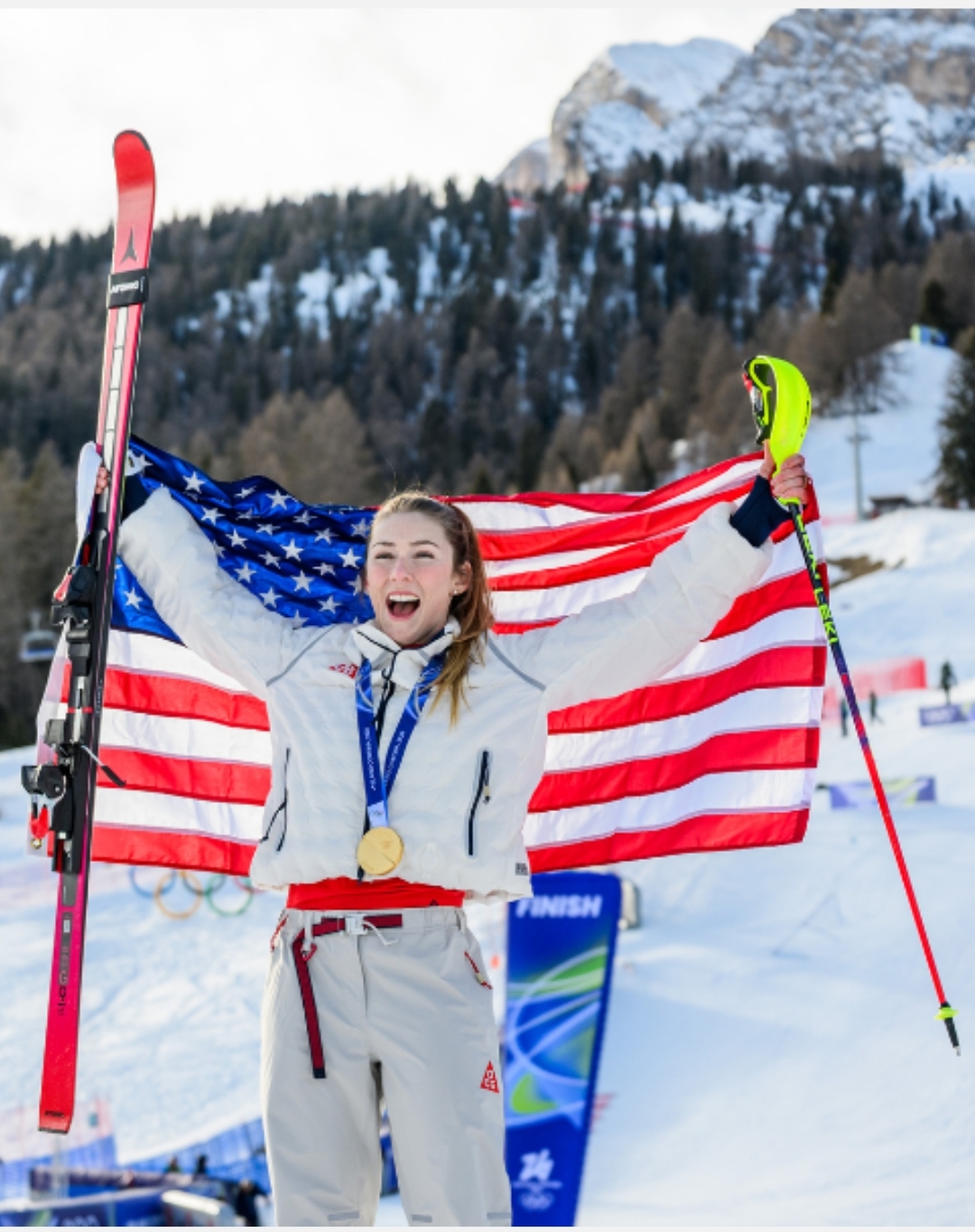
Mikaela Shiffrin isn’t closing the chapter just yet. Fresh off one of the most dominant performances in Olympic alpine skiing history—claiming slalom gold at the 2026 Milano Cortina Winter Games—the 30-year-old legend addressed the burning question on everyone’s mind: Will she chase another medal in the French Alps in 2030?
Her answer? Measured, honest, and quintessentially human.
“Four years feels like a lifetime,” Shiffrin told Sports Illustrated in a candid post-Games interview. “So it feels so far away, but also I know how fast that time can go. So I won’t say no, but I’m not going to say yes either.”
No retirement announcement. No firm commitment. Just the raw perspective of an athlete who’s spent nearly two decades at the absolute pinnacle, balancing unparalleled success with the very real fears that come with it.
Shiffrin’s Cortina slalom run was pure mastery. She attacked the Olimpia delle Tofane course with precision and power, posting a combined time of 1:39.10 and winning by a commanding 1.5 seconds over Switzerland’s Camille Rast—the largest margin in any Olympic alpine event since 1998. At 30, she became the oldest American alpine skier to win Olympic gold (and, remarkably, she’s also the youngest from her nation, having taken slalom gold at 18 in Sochi 2014).
The victory delivered her third career Olympic gold—setting a new U.S. record for most in alpine skiing—and snapped an eight-year individual medal drought that had weighed heavily since Beijing 2022. It was redemption wrapped in dominance, proving once again why she’s widely regarded as the greatest skier the sport has ever seen, with 108 World Cup wins and counting.
But even in triumph, Shiffrin remains candid about the toll. In interviews, she’s opened up about the deep-seated fears that shadow elite competition: “I’m afraid to get injured. I’m afraid to feel pain. I’m afraid to fail.” Those words hit harder in light of her brutal November 2024 crash in Killington—a high-speed wreck that left a five-centimeter abdominal puncture narrowly missing vital organs and requiring surgery. She returned stronger, but the scars linger, physical and mental.
By 2030, Shiffrin would be 34. The sport’s demands don’t ease with age—recovery slows, risks mount, and the body pays a price for every aggressive turn. Yet her hesitation isn’t defeat; it’s wisdom. She’s already achieved everything externally possible. Any decision to continue would be deeply personal, driven by passion rather than proof.
For now, the door stays cracked open. Shiffrin plans to jump back into World Cup action soon, eyeing Super-G training and the rest of the season. Long-term? Time will tell.
In an era where athletes often script their exits, Shiffrin’s refusal to box herself in feels refreshingly real. She’s not chasing legacy—she’s living it, one thoughtful turn at a time.
Whether we see her in 2030 or not, Mikaela Shiffrin’s journey continues to inspire. The greatest isn’t done deciding her future… and that’s exactly why fans can’t look away. ⛷️🇺🇸
