
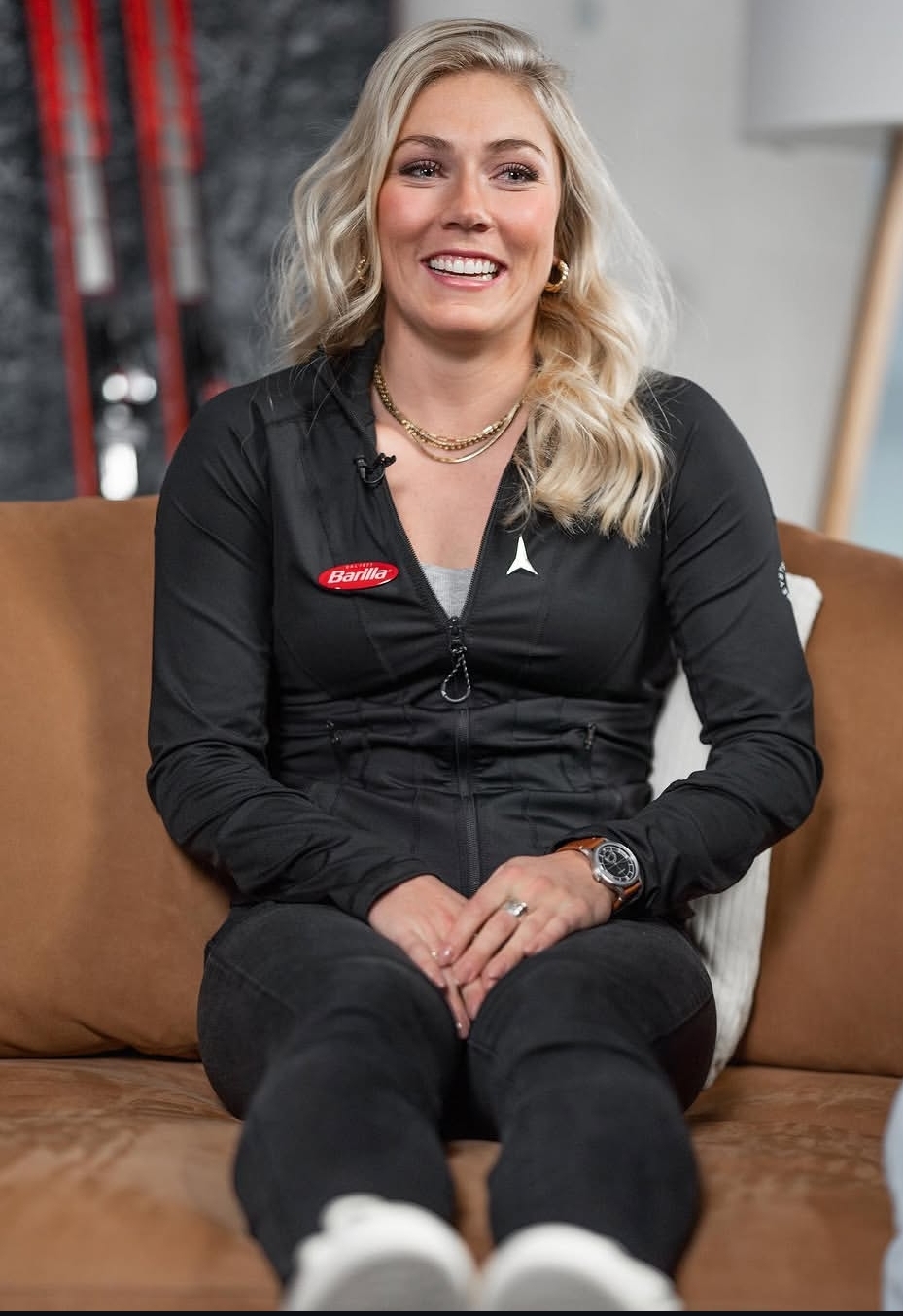
Mikaela Shiffrin has spent 16 years rewriting the record books. This winter, the winningest alpine skier in history says the books were never the point. Mikaela Shiffrin at the 2026 Olympics: The secret to her thrilling slalom victory.
“The joy for me has never been about medals or records,” the 31-year-old American said Tuesday, announcing what she is calling an “exploration season.” Less slalom. More giant slalom and super-G. Not a retreat. A dare.
“I’m not trying to do less because I care less,” Shiffrin said. “I’m trying to do something different because I still care SO much.”
The timing is the part that stops the sport. Shiffrin arrives at this choice off a season that would have closed most careers. She won a second Olympic slalom gold at Milano Cortina, her first individual Olympic gold since Sochi in 2014, and locked a ninth World Cup slalom title plus a sixth overall crystal globe. She holds 110 World Cup wins, 73 of them in slalom, the most victories by any skier, man or woman.
Then she dialed the specialty back.
Her first slalom start is planned for the Stifel Killington Cup over Thanksgiving weekend in Vermont. She is expected to skip the season’s opening slaloms in Levi and Gurgl. The World Cup opens October 24 with a giant slalom in Sölden, Austria, and that is where her attention goes first.
She was blunt about why the safer path is the wrong one. Racing slalom underprepared, she said, would be “like jumping into a giant blender and just trying to avoid the blades.” Staying only where she has been most successful, she added, “feels like a faster path toward retirement.”
The numbers say she is not starting from zero. Shiffrin already has more women’s World Cup giant slalom wins than anyone else, 22, and season titles in the discipline in 2019 and 2023. Her only super-G win came in that 2019 season, still her best. Last winter she finished fourth in the giant slalom standings and outside the top 30 in super-G. The gap is the point.
Lead coach Karin Harjo heard the plan and did not flinch. “The joy that she gets in the challenge and improving and getting better… makes complete sense,” Harjo said. “Sweet, let’s do that.”
Shiffrin is not selling this as a soft landing. “I feel ambitious. I still feel competitive. I feel like I have a desire to ski fast,” she said. “I feel like those things haven’t changed. I’m really just giving myself permission to be curious about where that takes me, and that’s the exploration.”
She also framed it as gratitude, not withdrawal: ski because she wants to ski, with no less effort and no less commitment, only a different target.
For a skier who has already won almost everything the sport can hand her, the move is the story. The medals stay on the wall. The joy, she says, was always somewhere else, between the start and the finish, on a hill she has not yet mastered.
